Built on a hilltop, the Cité, home to the medieval part of the city, is visible from afar and its silhouette, with its spectacular ramparts and 52 towers standing out sharply against the landscape — echoes the fairy-tale citadels popularized by Walt Disney, who is said to have stayed in Carcassonne in the 1950s.
The city boasts an ideal location: between the Mediterranean Sea and the Atlantic Ocean on one side, and between the Pyrenees and the Montagne Noire on the other – this name, admittedly a bit ominous, marks the end of the Massif Central, the mountain range in the heart of France.
This central location made it a strategic target. Its elevated position on the right bank of the Aude – the river that gives its name to the department – allows it to overlook the plain. On the other bank of the Aude stands the Bastide Saint-Louis, which grew in the 13th century, making Carcassonne quite literally a city with two historic faces—and one not to be missed.
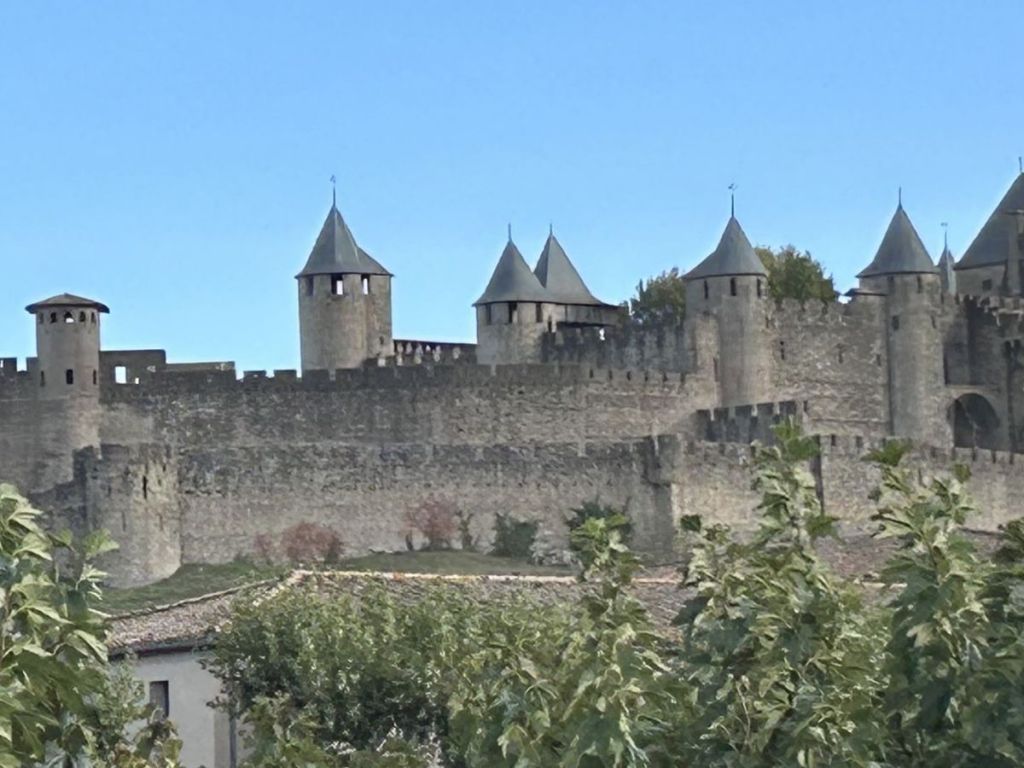
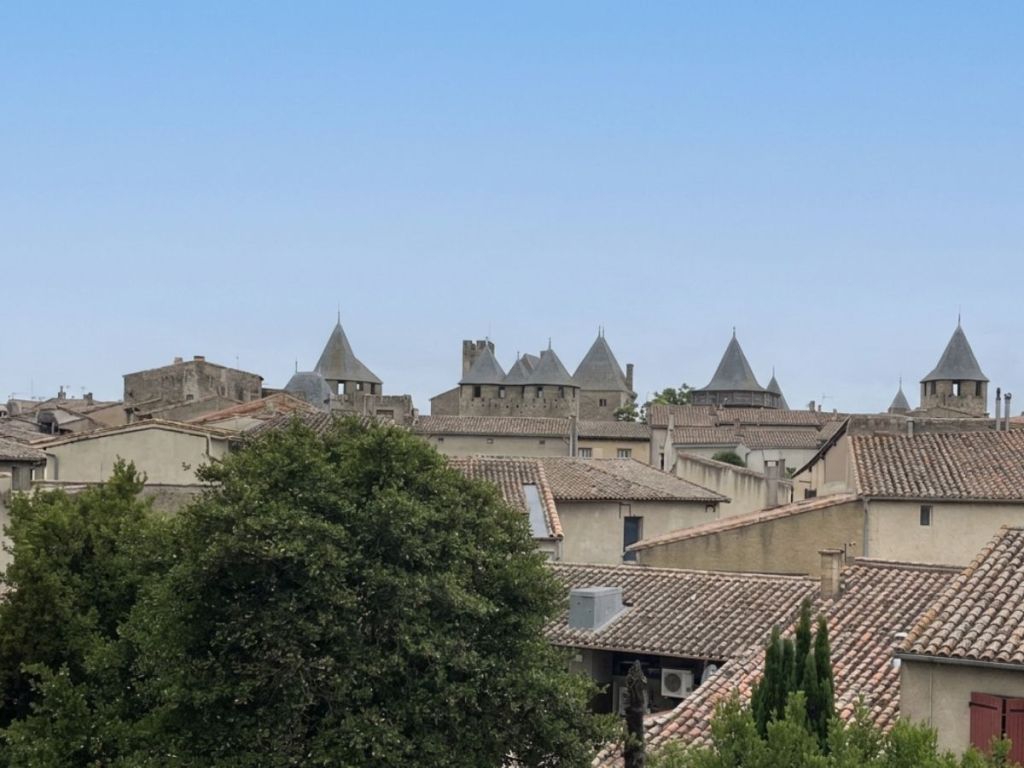
Rooftops and turrets of the Cité ©Algoma
Carcassonne: A History from the Romans to the Middle Ages
The first defensive towers visible from afar in Carcassonne were built by the Romans at the beginning of the 1st century AD.
Discover its story
Occupied as early as the 6th century BC, Carcassonne came under Roman rule around the turn of the era. The city then passed into the hands of the Visigoths and, more briefly, the Muslims, before Franks took over. As we have seen, the Chanson de Geste recounts several episodes of the struggle between the Franks and the Saracens.
In the 11th century, the city fell under the influence of the powerful Counts of Barcelona before being controlled by the Trencavel family who established Carcassonne as the centre of their power in the Lower Languedoc. The Basilica of Saint Nazaire and the palatium – the future Count’s Castle – were built within the Cité, while the Roman ramparts were restored.
At the beginning of the 13th century, the palace itself was fortified, defensive openings were added to the battlements, and the Tour Pinte was raised to provide even better surveillance of the surrounding countryside. However, the Albigensian Crusade brought an end to the Trencavel family’s rise to power in Carcassonne.
Carcassonne, where the Cathars had taken refuge, fell on August 15, 1209. Years later, in 1226, the city was annexed to the French royal domain.
When another Trencavel heir unsuccessfully attempted to retake the city in 1240 with the help of some of the inhabitants, royal retaliation was harsh: Louis IX ordered the insurgents’ homes razed. It was only a few years later that the people of Carcassonne were able to return and settle on the left bank of the River Aude, in the newly built Bastide Saint Louis.
Thus, the twists and turns of Carcassonne’s history offer a fascinating glimpse into what life was like in southern France during the Middle Ages: rivalries between lords ruling over territories whose borders shifted according to alliances and warfare; bonds of vassalage and allegiances sworn by the weak to the strong— all the way up to the King of France — as well as the impact of religious choices… Together, these forces shaped the history of France and still leave their mark on the French cultural landscape today.
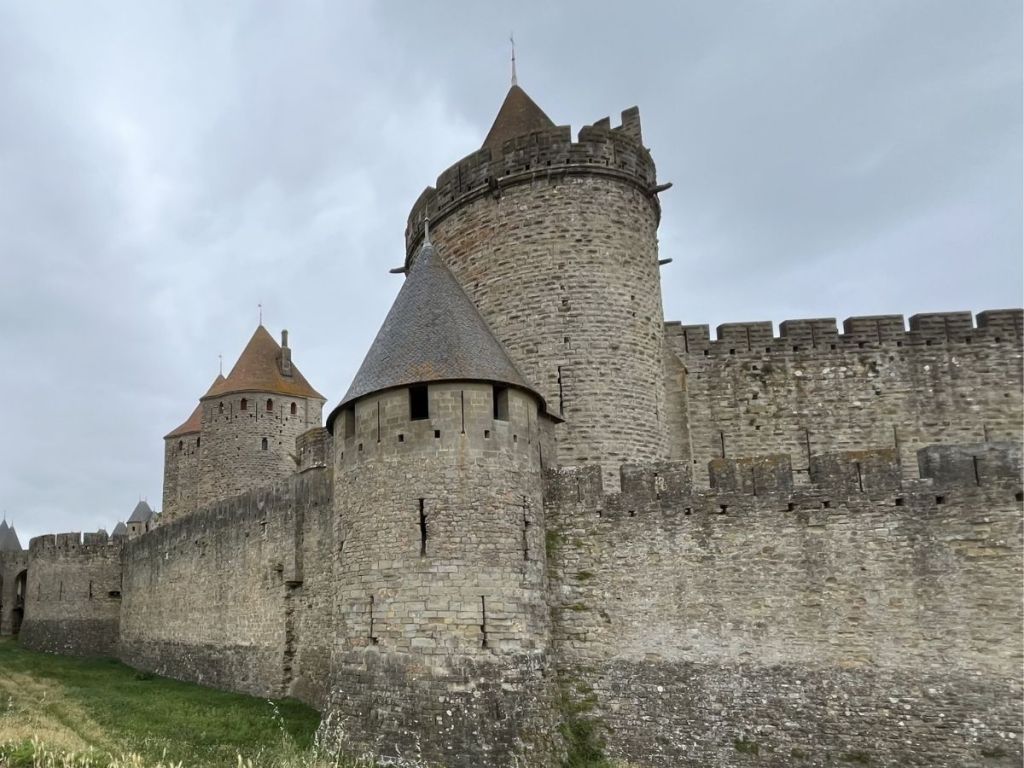
The double ring of ramparts ©Algoma
Carcassonne’s Medieval Ramparts: How the Fortress Was Reinforced
It can be said that it was in the 13th century that the city of Carcassonne took on a form close to the one we know today.
Discover its story
First, Louis IX – better known as Saint Louis, whom we encountered earlier in Aigues-Mortes – having driven the insurgents from the city, it became necessary to find new homes for the inhabitants of Carcassonne. To this end, the royal authorities commissioned the construction of the Bastide Saint-Louis in 1248.
Alongside the creation of the Bastide, the ramparts of the Cité were reinforced. With the void created by the expulsion of the insurgents at the foot of the fortress, a double ring of walls was built. Between the two rings of ramparts, an open area known as the “lices” made assaults on the Cité even more difficult.
Under Philip III the Bold and Philip IV the Fair, the fortifications were modernized and reinforced—for example, with the addition of loopholes to allow crossbow fire—and new gates were created, notably the monumental Narbonne Gate, which you will pass through if – or rather, when – you visit Carcassonne.
These defenses were necessary because—in addition to the Cathar threat of the first half of the 13th century —the Crown of Aragon, deeply connected to southern France, particularly through the network of feudal allegiances between the counties, continued to covet the lands of Languedoc. It would take the Treaty of Corbeil in 1258 to establish the division of lands between the Crown of Aragon and the King of France, placing the border between France and what would become Spain about fifty kilometers south of Carcassonne.
A spectacular example of a city with double walls still standing, Carcassonne is a city where history is brought to life.
Viollet-le-Duc: The Man Who Restored Carcassonne
Discover its story
Over the years and centuries, the Cité gradually lost its vitality. While the lower town, the Bastide Saint-Louis district, developed thanks to its economic activity, the Cité, repurposed as a military base with no real purpose, was abandoned by the local population.
The Cité became the poor quarter. Workers lived in shacks built in the space between the two walls (some traces of these structures are still visible in the “lices”, this open space between the walls), contractors used the area for storage, and the buildings gradually fell into ruin.
A local man, Jean-Pierre Cros-Mayrevieille (1810-1876), literally saved the Cité from destruction. Distressed to see the brambles proliferating and horrified to hear of the planned demolition of the ramparts, he first succeeded in having the Basilica of Saint Nazaire listed as a historical monument, and then saved the ramparts from demolition. He was one of the first to help preserve this incredible testament to the past.
Viollet-le-Duc (1814-1879) will have a considerable impact in France and even beyond. As Americans, you can see several traces of his influence in your country, particularly in New York: he was responsible for the initial design of the internal structure of the Statue of Liberty, Bartholdi’s work, before Gustave Eiffel took over the structural design after Viollet-le-Duc’s death.
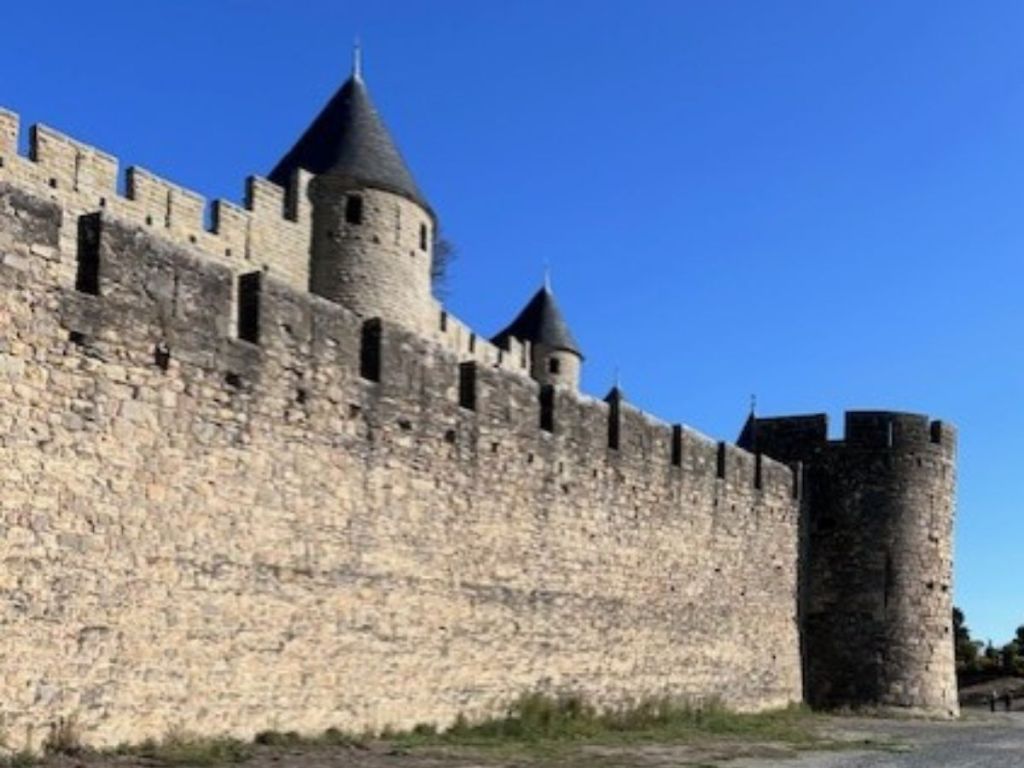
He dedicated decades of his life to the restoration of the Cité de Carcassonne. Some of his choices are still sharply criticized today. Believing they were in keeping with the style of certain medieval French fortresses, he topped some towers with pointed, slate-covered roofs, common in the architecture of Northern France, contrasting with the flat-roofed, tile-covered towers seen elsewhere. Similarly, when you cross the drawbridge of the Narbonne Gate, the gateway to the Cité, don’t imagine you’re stepping into the past, as this drawbridge likely didn’t exist before Viollet-le-Duc.
Nevertheless, it is thanks to him that we can still walk around the ramparts and enter the medieval Cité today.
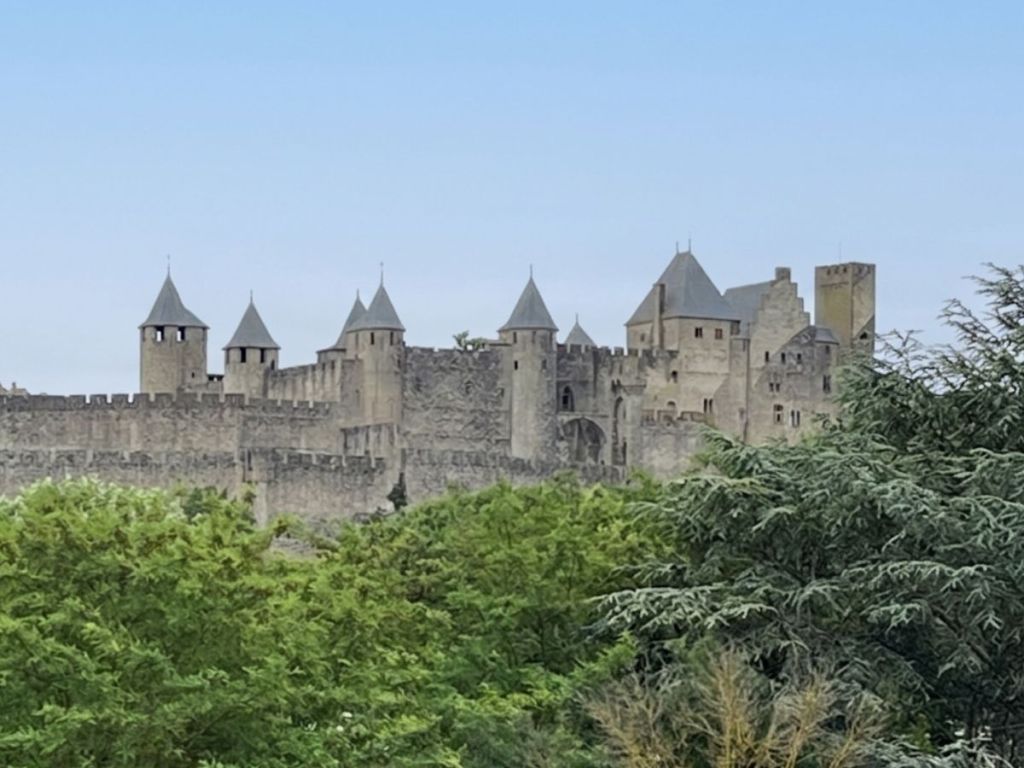
The Château Comtal, rising above the ramparts ©Algoma
The Count’s Castle
The Count’s Castle in Carcassonne offers a commanding view of the valley, giving its owners control over the river below and the ability to withstand enemy attacks.
Discover its story
The site was likely occupied as early as Antiquity, as shown by the discovery of Roman mosaics in the early 19th century. However, the Count’s Castle truly developed from the 11th century onwards, with the arrival of the Trencavel family in Carcassonne – from whom the name “Count’s Castle” is derived.
After the Albigensian Crusade in the early 13th century, royal authority transformed the castle into an important administrative and military center, while Carcassonne gradually became one of the main centers of the dreadful Inquisition against the Cathars in southern France. The final renunciation by the last Trencavel heir to his rights to Carcassonne in 1247 confirmed this evolution.
Saint Louis had a second wall built, strengthening the castle’s defenses. His successors, Philip III the Bold and Philip IV the Fair, further expanded and reinforced the defensive system of the fortifications. The Count’s Castle then acquired much of its current appearance.
Only part of the original castle remains, as the restorations of the late 19th and early 20th centuries—carried out by Viollet-le-Duc and his successors—added features whose historical accuracy is now debated. Still, the restored fortifications now offer some of the most beautiful views over the surrounding landscape.
Inside, the Count’s Castle feels more like a military garrison than a princely palace. One room, however, features wall paintings depicting battles between the Franks and the Saracens, likely inspired by 12th-century epic poetry.
If climbing and descending time-worn steps doesn’t deter you, don’t leave the Cité de Carcassonne without visiting the Count’s Castle. A fortress within a fortress, the Count’s Castle embodies much of the history of the Cité, and its development is closely tied to the role it played over the centuries.
And above all, access to the ramparts, currently only possible through the Count’s Castle, offers stunning views of the medieval Cité, the surrounding hills, and the Bastide Saint-Louis district on the other side of the River Aude.
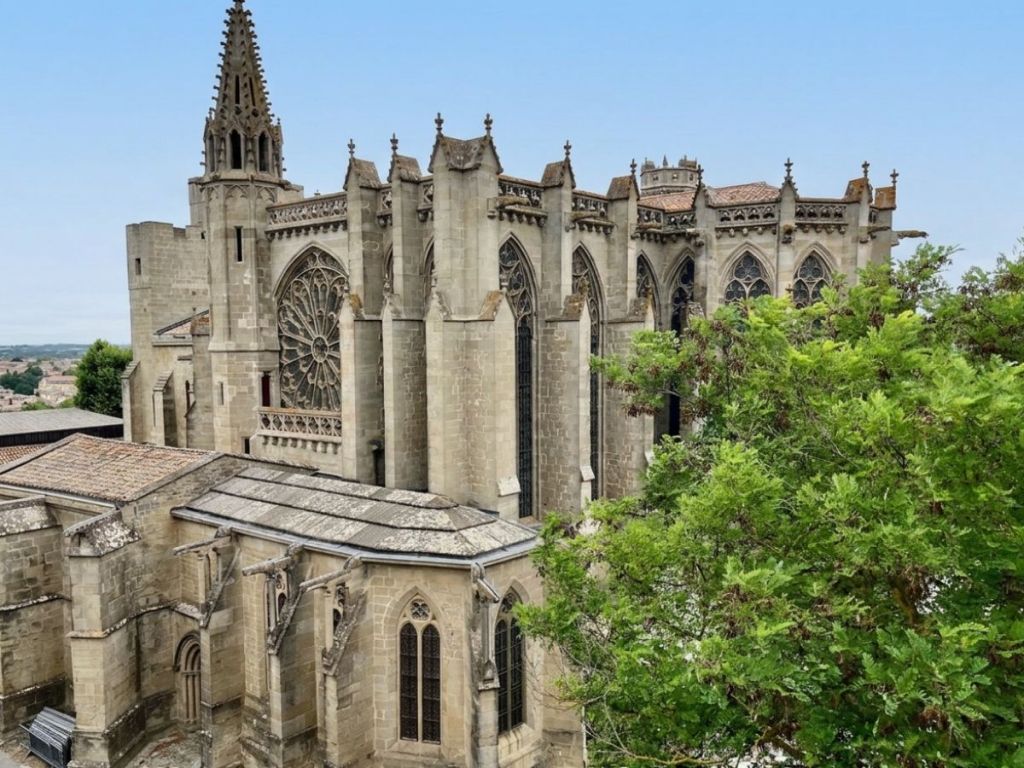
The Rayonnant Gothic choir of the Basilica of Saint Nazaire ©Algoma
The Basilica of Saint Nazaire
Amidst the bustle of the city and the tourists, one place offers a delightful contrast of calm and serenity: the Basilica of Saint Nazaire.
Discover its story
Often, churches bear the marks of centuries past, and the Basilica of Saint Nazaire is no exception. On a site documented as early as the 10th century – and perhaps occupied by an even older building–a first Romanesque church was consecrated at the end of the 11th century. The nave was erected in the 12th century before the major alterations of the 13th and 14th centuries profoundly transformed the structure.
It was therefore in the 13th century that the church acquired its magnificent current appearance. Outside as well as inside, especially within, it is possible to see elements of the humble Romanesque period – embedded in the characteristic Rayonnant Gothic features of the choir and transept.
Inside the basilica, your gaze may be drawn to the tomb of Bishop William Radulphe–a key figure in the church’s construction during its Gothic period. Centuries later, a local man, Jean-Pierre Cros-Mayrevieille (1810-1876), horrified to hear of the planned demolition of the ramparts, would discover this tomb in the brambles proliferating. It will help him in raising public awareness and launch the movement to preserve the heritage of the Cité.
The Basilica of Saint Nazaire underwent restoration by Viollet-le-Duc, and some of its Romanesque elements actually date from the 19th century. Yet, if you come inside to relax on a sunny day, you can admire the shimmering reflections of one of the most spectacular collections of Gothic stained glass in the south of France.
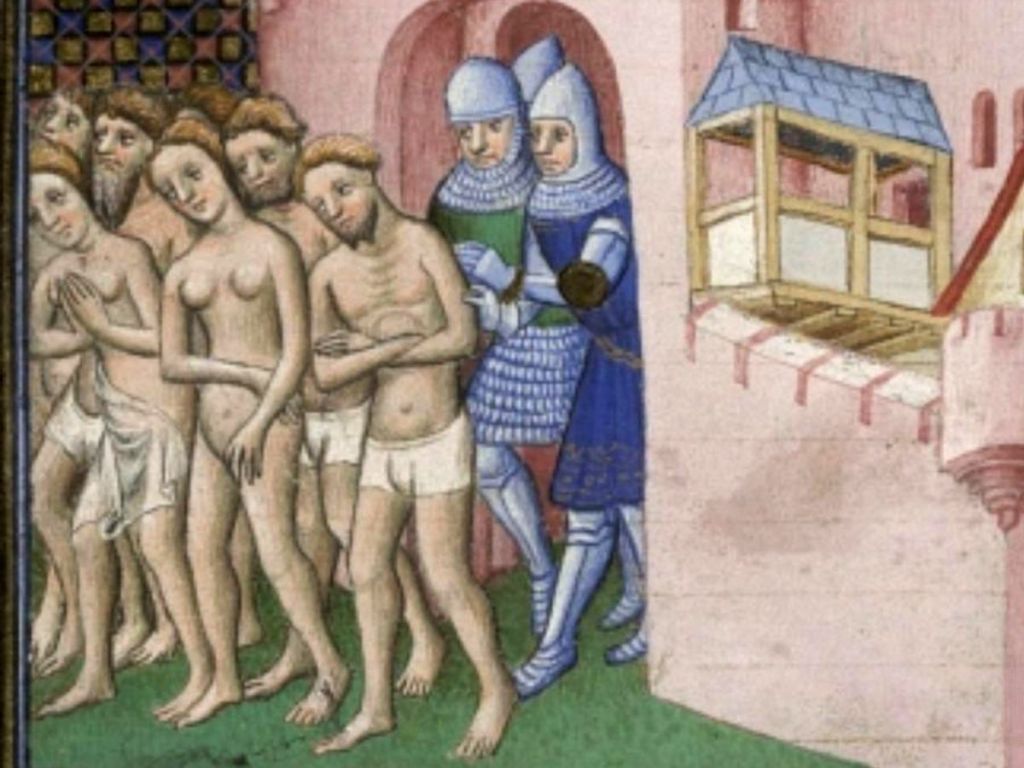
Who Were the Cathars? Understanding Carcassonne’s Cathar History
Discover its story
The development of Catharism in the Middle Ages left a profound mark on Carcassonne and still shapes the landscape of the Aude region today. The area is famous for its Forteresses royales du Languedoc, commonly known as “Cathar castles”: spectacular fortified sites perched on rocky ridges that often seem to merge with the landscape itself. They were inscribed on the UNESCO World Heritage List in July 2026.
Catharism had a profound impact on Carcassonne. In the 12th century, as the Cathar movement gained ground in the region, Raymond-Roger Trencavel, Count of Carcassonne, offered protection to the Cathars.
But what exactly was Catharism? For an American accustomed to a wide diversity of religious practices within Christianity, it may be surprising that such a movement was considered a threat by the Church at the time. Yet, medieval France followed a different path from the tradition of religious tolerance that later developed in the United States.
Instead, the Cathars—who did not call themselves by that name, but perhaps more modestly referred to themselves as the “good men”— faced severe persecution. According to Cathar doctrine, the material world was created by an evil principle opposed to the God of the spiritual world. Their quest for purity, their vow of poverty, and their rejection of ecclesiastical authority—particularly their refusal to pay the tithe, a local church tax—led Innocent III to launch the very first crusade on Christian soil: the Albigensian Crusade also known as the Cathar Crusade.
The assassination of the Pope’s representative in 1208, near Saint-Gilles in the Gard region (home to the beautiful Saint-Gilles Abbey), helped trigger this crusade, led by lords allied with the Papacy. Before reaching Carcassonne, the crusaders first passed through Béziers. It is remembered as the place where the famous phrase “Kill them all, God will recognize his own” (full story can be read on Béziers) was supposedly uttered.
After the Albigensian Crusade, the Papacy gradually established the terrible system of the Inquisition in order to root out heresy. From the 1230s onward, the Inquisition established itself in the Cité de Carcassonne. The Inquisitor’s residence, the Tower of Justice (also known as the Tower of the Inquisition), and the Gallery of the Inquisition are among the still-visible witnesses of this dark period in the city’s history.
The Inquisition established in medieval France was part of a broader history of religious repression in Europe, with later inquisitorial institutions also developing in Spain and Italy.
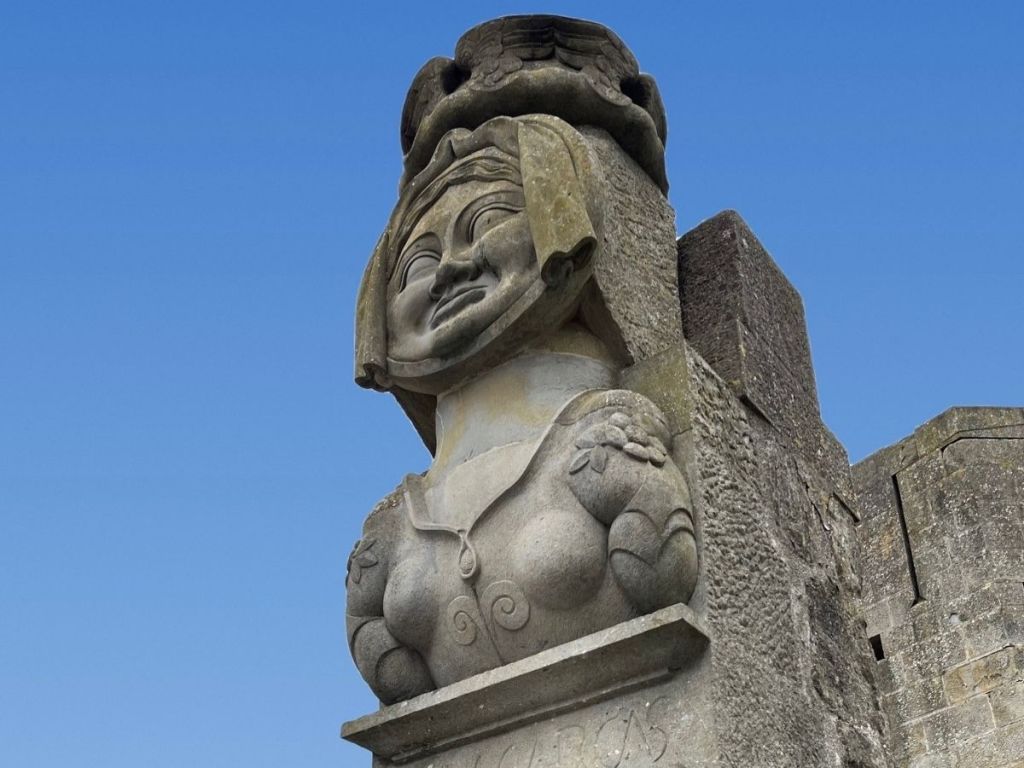
The statue of Dame Carcas, the legendary heroine said to have given Carcassonne its name © Algoma
Carcassonne: A Legendary Name
If you come to Carcassonne, you will almost certainly pass by Dame Carcas! The charming legend behind the origin of the name Carcassonne requires some understanding of French, as it is a playful reinterpretation of the name.
Discover its story
According to the legend, during Charlemagne’s conquest of southern France, the royal troops were unable to breach the city’s defenses, which were then occupied by Muslims (the famous Saracens of the time, whose battles with the Franks can be seen in the frescoes of the Château Comtal). After several years of siege, Dame Carcas, widow of the Muslim prince Balaach, Lord of Carcassonne, is said to have used a stratagem to convince Charlemagne that the City could still withstand the siege indefinitely.
The ruse was to feed the last pig inside the city with the last sack of wheat and then throw the fattened pig over the ramparts. Seeing the pig burst open on the ground, its belly stuffed with all that wheat, the attackers supposedly lifted the siege, believing the battle was lost. It was then that Lady Carcas is said to have rung the bells and opened the city gates. A herald was sent to fetch Charlemagne to inform him that “Carcas sonne” (“Carcas is ringing the bell.”)
The story goes that Charlemagne then ceded the city to Lady Carcas, who in return converted to Christianity.
Amazingly, this legend is centuries old. The first written account dates from the 16th century, and it likely goes back to the medieval period. Furthermore, it’s quite amusing to discover that it has a counterpart in Muslim legends, with a heroine who was initially Catholic but converted to Islam…
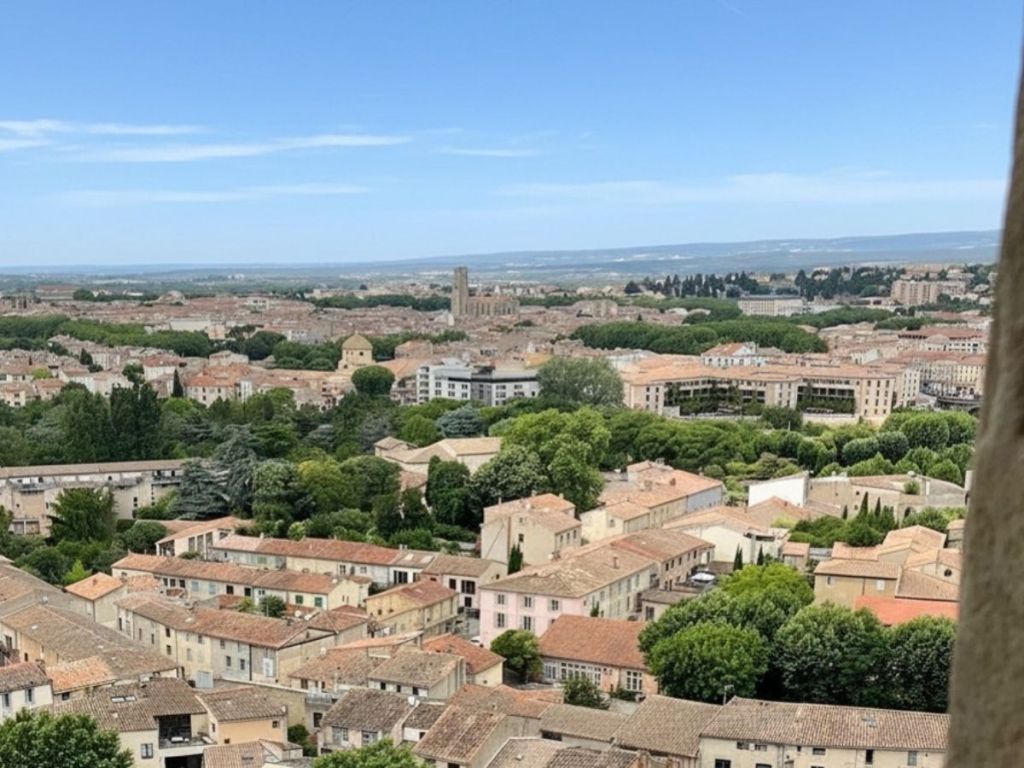
The grid plan of the Bastide Saint-Louis, laid out in the 13th century ©Algoma
The Bastide Saint-Louis: Modern… Since the Middle Ages
In France today, when people talk about Carcassonne, they immediately think of the medieval fortified Cité. Less often, they mention the Bastide Saint-Louis, the so-called lower or “modern” town, the one you pass through when walking from the train station to visit the Cité.
Discover its story
Yet this “modern” town has its roots deep in the Middle Ages! It was under Louis IX – known as Saint Louis – that the Bastide Saint-Louis was created, with the aim of rehousing the population expelled from the Cité during the Cathar period.
The distinctive feature of this part of Carcassonne is its grid plan, characteristic of this type of urban development. This type of town is specific to this southwestern region of France, where it was highly developed from the early 13th to the early 14th centuries – to the point that up to five hundred such towns can be found throughout this part of France.
It seems that the creation of these towns almost from scratch answered various economic and political needs of the time: the bastides were more than just a way of organizing urban space; they also offered advantages to those who chose to live in them.
Today, the grid plan will seem far more familiar to you than it does to the French – as it is much less common in Europe, and particularly in France, than it is in the United States.
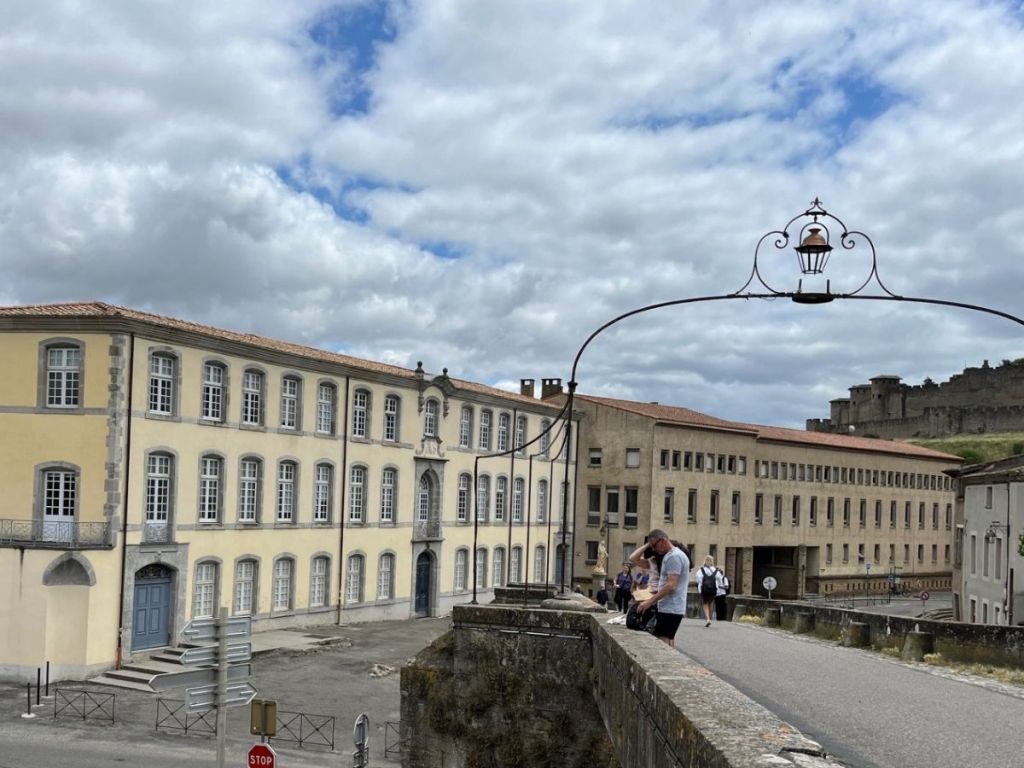
The Ancienne Manufacture Royale de Draps ©Algoma
La Bastide Saint-Louis : la Manufacture
Thanks to a long-standing cloth-making tradition, La Bastide Saint-Louis became one of the leading textile-producing centers in southern France and in the kingdom as a whole.
Discover its story
From the Middle Ages onwards, Carcassonne became renowned for its high-quality, highly sought-after woolen cloth. Several factors explain this success, notably the quality of the wool from sheep in the Montagne Noire and the use of sophisticated dyeing techniques. Furthermore, its strategic location at the crossroads of routes between east and west—the Mediterranean and the Atlantic—on the one hand, and south and north—Spain and Northern France—on the other, allowed it to both benefit from new techniques and export its production.
So much so that the textile manufactories of the Bastide Saint-Louis benefited from royal protection, and the cloth industry was its source of wealth for many centuries. Numerous traces of this opulence remain in Carcassonne, with its grand historic townhouses built between the Renaissance and the 18th century. The wine industry further contributed to this economic prosperity.
Yet, in the 19th century, competition from large, industrialized textile centers and the changes brought about by the Industrial Revolution led to the decline of Carcassonne’s cloth industry.
At the same time, viticulture suffered successive crises, from phylloxera to the overproduction that struck Languedoc at the end of the century (see the publication on Béziers and the revolt of the winegrowers of the Midi in 1907). These upheavals brought an end to this long period of prosperity and marked the end of the golden age of the Bastide Saint-Louis.
Fortunately, between Place Carnot, at the heart of the grid pattern and home to a lively market of the kind we love so much in the South of France, strolling through these streets lined with elegant townhouses that whisper of bygone wealth, there is still plenty to enjoy in this part of Carcassonne.
You will certainly be surprised to learn that the pink marble, quarried from the nearby Minervois region, which lies beneath your feet in Place Carnot and in several streets of the Bastide, was used in some of France’s most prestigious monuments, from the Palace of Versailles to the Louvre and the Opéra Garnier.
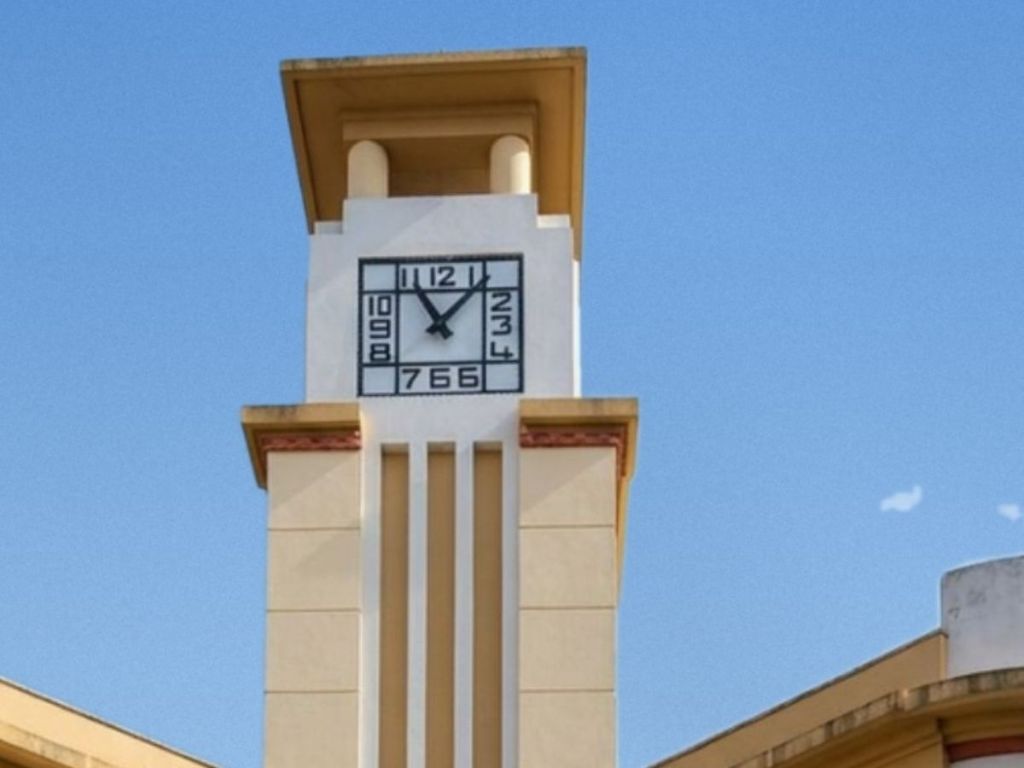
Art Deco clock tower in the Bastide Saint-Louis ©Algoma
La Bastide Saint-Louis: From the Middle Ages to the Modern Era
Shaped by the Middle Ages from its very foundation, la Bastide Saint-Louis in Carcassonne is also a town steeped in history, from the Renaissance to the 20th century.
Discover its story
The Bastide was once fortified to protect itself from destruction such as the one due to the Black Prince’s famous raid in 1355. These fortifications were gradually dismantled in the 18th century, making way for peaceful boulevards and green spaces. Traces of these fortifications can still be seen here and there, and their vestiges, as well as the newly landscaped areas, bear witness to the changes brought about by the centuries in this historic district of Carcassonne.
The 20th century also left its mark on the town with Art Nouveau and Art Deco. These two distinctive architectural movements—one with its swirling curves and plant-inspired design, the other with its straight lines and geometric patterns—followed one another and gradually intertwined in the streets of the Bastide Saint-Louis, offering sources of wonder at virtually every turn. The former Town Hall recalls a period when American skyscrapers served as a source of inspiration.
The Tourist Office provides a small booklet to help you easily locate the buildings of these two movements throughout Carcassonne.
And to complete your visit, you can also take a boat trip on the Canal du Midi, the 17th-century engineering masterpiece, whose spectacular nine locks of Fonséranes can be found nearby in Béziers.
Interested in visiting Carcassonne?
→ Find a selection of guided tours and activities
If you book through this link, I may receive a small commission at no extra cost to you.
Want to explore further?
Explore Narbonne, where Roman, medieval, and Mediterranean history meet…
For sea, sunbathing, and seaside villages, head to the Narbonne Coast…
And if you’re after strong emotions, discover the castles, abbeys, and landscapes of the Inland Aude…
And just beyond, two neighboring lands await: one where the Mediterranean meets la joie de vivre — discover the Hérault… and another, a step further, where Rome, wild landscapes and the sea meet — explore the Gard…
 Algoma