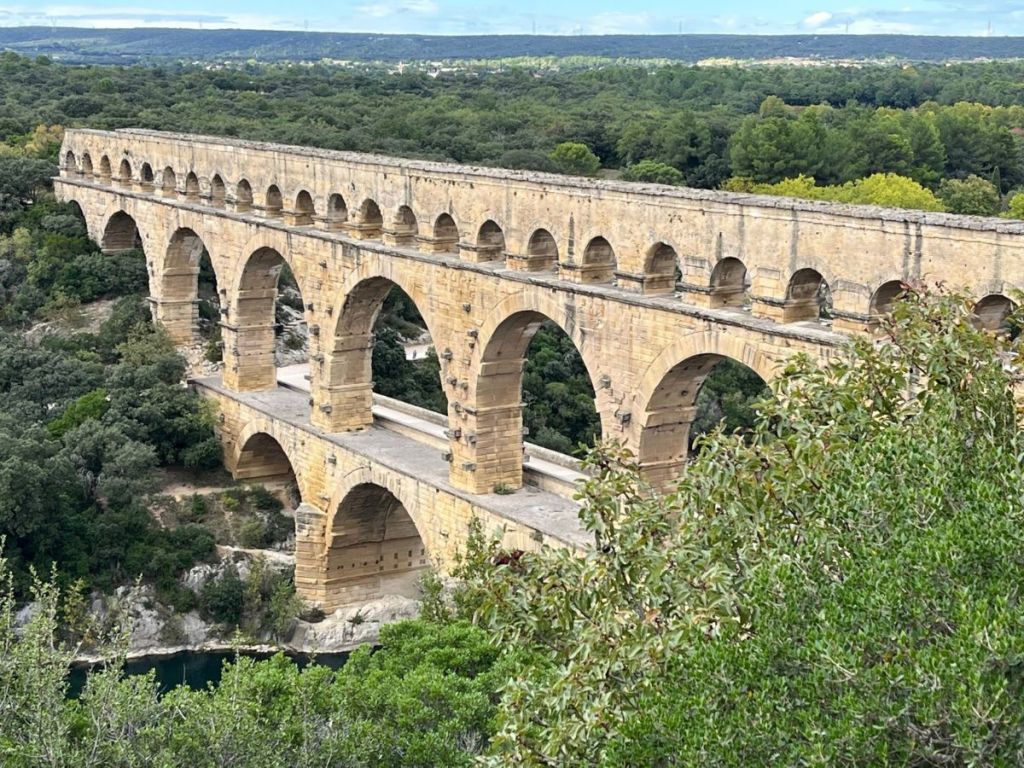
Just beyond Nîmes, history unfolds in unexpected places.
Discover the iconic Pont du Gard, charming riverside landscapes and peaceful towns where centuries of history meet authentic local life far from crowded routes.
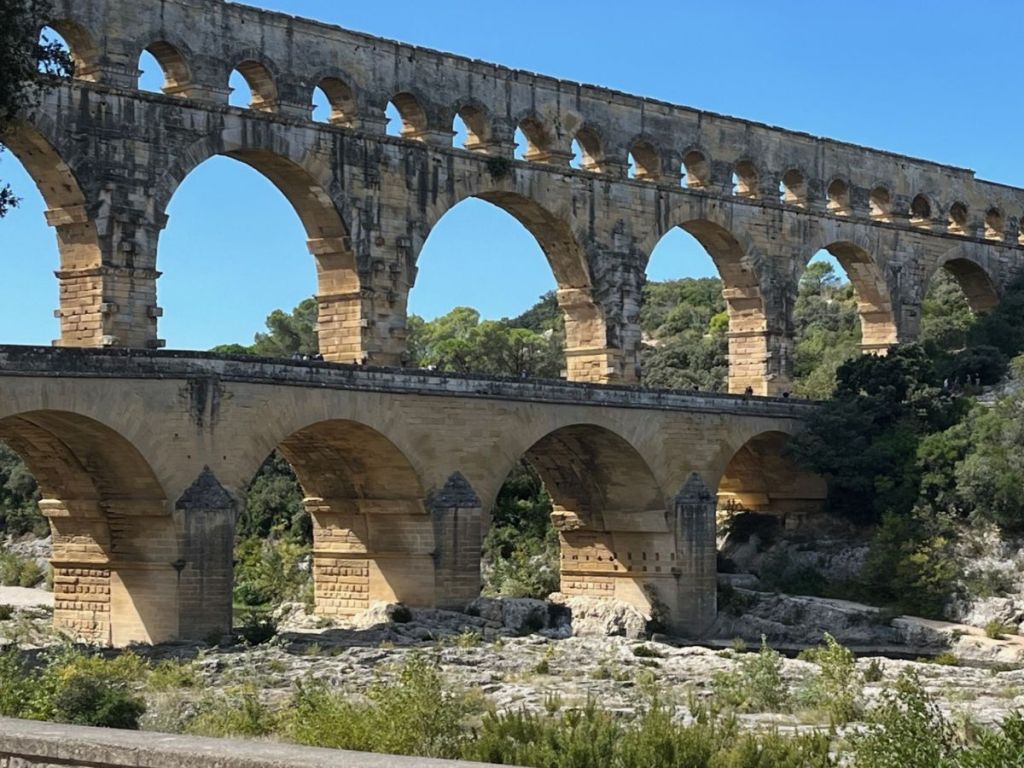
The Pont du Gard Roman aqueduct, a UNESCO World Heritage Site © Algoma
Le Pont du Gard: Follow in the Footsteps of the Romans
Discover its story
One of the best day trips from Nîmes, the Pont du Gard is a must-see for anyone exploring Roman sites in France. Listed as a UNESCO World Heritage Site since 1985, this aqueduct is one of the most impressive Roman monuments you can experience in southern France. Built in the 1st century AD, it once carried water over 50 kilometers to the city of Nîmes — a remarkable achievement that still inspires admiration today.
Stretching 275 meters in length and rising nearly 50 meters high, the aqueduct spans the Gard river across three elegant tiers. It is the only structure of its kind still standing in such a complete state, a testament to both Roman ingenuity and the durability of its design. Although it stopped supplying water as early as the 6th century, it continued to serve as a bridge in the Middle Ages — one of the reasons it has survived so well.
Walking beneath its arches or across its upper level is the best way to appreciate its scale and harmony. But beyond its historical significance, the site is also very much alive today. On warm days, locals gather along the riverbanks to picnic, swim or simply enjoy the setting — a relaxed and joyful atmosphere that adds to the experience.
To better understand how this extraordinary structure functioned in Antiquity, a visit to the Musée de la Romanité in Nîmes provides valuable insight — bringing the story of the aqueduct vividly to life, and enriching your visit to this unforgettable monument, which has crossed the centuries without losing any of its splendor.
Interested in visiting the Pont du Gard?
→ Explore guided tours and experiences
If you book through this link, I may receive a small commission at no extra cost to you.
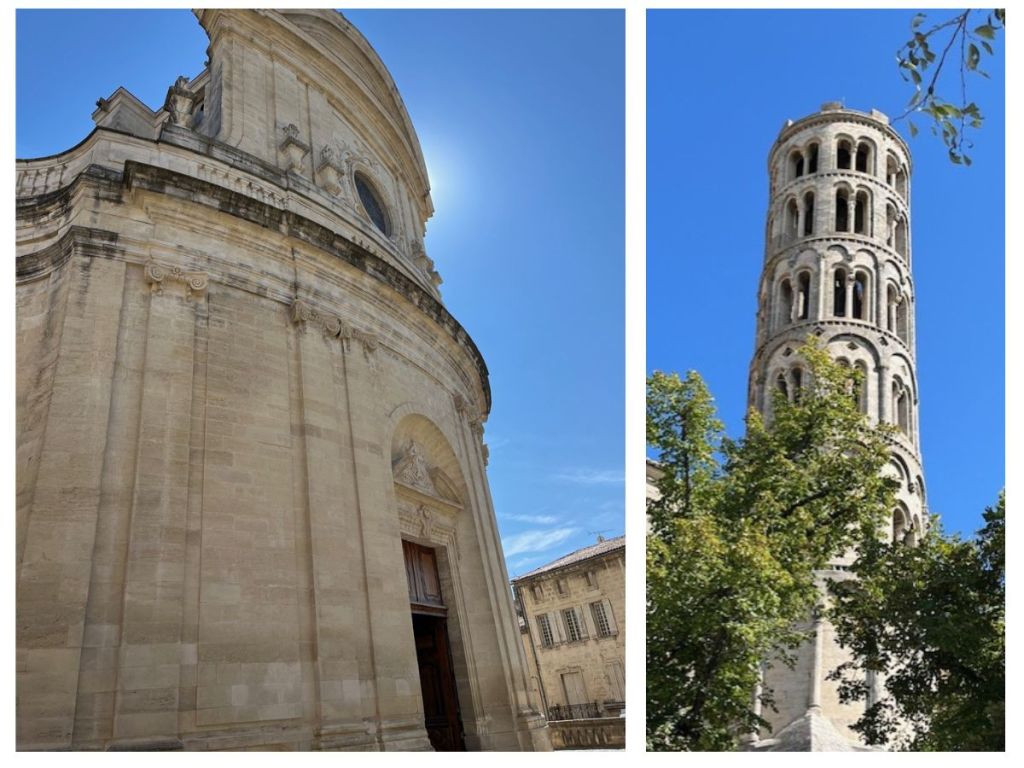
The Baroque church of Saint-Étienne and the Tour Fenestrelle in Uzès © Algoma
Uzès: A town where history and everyday life come together
Discover its story
Located in the north part of the Gard, Uzès is not only renowned for its market, it is also enjoyable for its quieter, more intimate beauty — especially on the Place aux Herbes, where shaded plane trees, arcaded houses and a central fountain create a scene of perfect harmony.
Some of the surrounding buildings date back to the 14th century, while others were added between the 16th and 18th centuries, giving the square its rich architectural character. It’s the perfect place to pause for a drink and soak in the atmosphere of southern France.
Uzès is more than just a charming setting. It is also the oldest duchy in France still owned by the same family. From Antoine de Crussol, who became Duke of Uzès in the 16th century, to Jacques de Crussol today, the same lineage has remained closely tied to the town. The ducal castle, with its distinctive Bermonde Tower, still dominates the skyline — a rare and fascinating continuity.
As you wander through the narrow streets climbing toward the castle, you’ll notice how well the town has preserved its character. While there are shops and lively streets, other architectural gems appear along the way. Don’t miss the Church of Saint-Étienne, with its graceful Baroque façade, and keep an eye out for small historical details — including a plaque recalling Charles Gide, uncle of the writer André Gide.
Just a short walk away rises the Cathédrale Saint-Théodorit d’Uzès, with its distinctive Fenestrelle Tower, one of the rare round bell towers in France.
Uzès is also connected to the region’s Roman past. It was from nearby springs that water was once carried all the way to Nîmes via the Pont du Gard — a remarkable link between the town and one of the most iconic monuments in southern France.
And then there is the market. Held on the Place aux Herbes — especially on Saturday mornings — it transforms the square into a vibrant celebration of colors, scents and local life. With up to 200 vendors, it is one of the most renowned markets in the region, lively and full of character.
Uzès is often considered one of the most beautiful towns in the south of France, and an ideal day trip from Nîmes. It is a place to enjoy — where each corner reveals a new detail, and where the charm of the past feels effortlessly present.
Interested in visiting Uzès?
→ Explore guided tours and experiences
If you book through this link, I may receive a small commission at no extra cost to you.
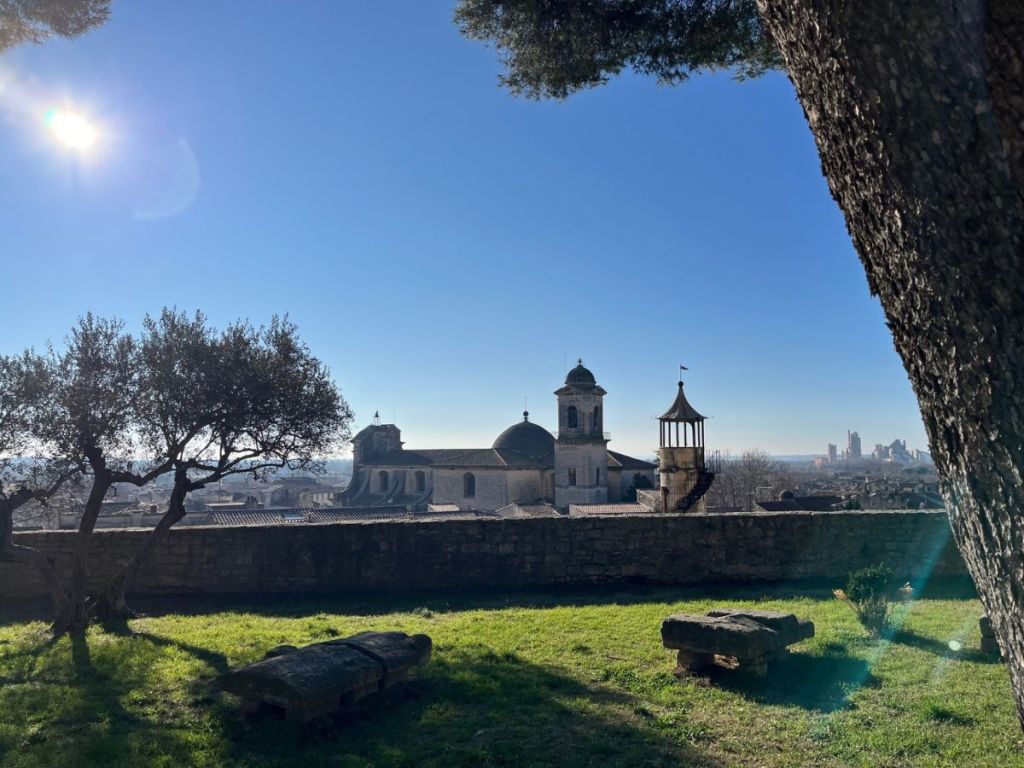
View of Beaucaire’s pagoda-style turret at the Hôtel de Clausonnette © Algoma
Beaucaire: between citadel and fair, the vestiges of a once-great center
Discover its story
At the edge of the Gard region, Beaucaire reveals the vestiges of a once-prosperous town, where history still lingers between the Rhône River and the remains of its medieval citadel.
The castle, originally built in the 11th century and later dismantled in the 17th, now stands in partial ruins. Yet its ramparts still offer beautiful views — over the town’s tiled rooftops on one side, and across the Rhône to its twin town of Tarascon on the other. A walk through the gardens surrounding its distinctive triangular keep is particularly enjoyable.
From the 13th century onward, Beaucaire owed much of its prosperity to its strategic port. It became the site of one of the largest fairs in France, attracting merchants from across Europe and the Mediterranean. Goods from Tunisia, Egypt, Syria and what is now Turkey were traded alongside products from Spain, Italy, Germany, England and the rest of France — making Beaucaire a vibrant hub of international exchange.
Today, a wide esplanade lined with century-old poplars still hints at the scale of this past activity, offering a striking perspective on what was once a center of intense commercial life.
As you wander through the historic streets, you’ll come across elegant 17th- and 18th-century townhouses, some hiding refined inner courtyards with decorative “chinoiserie” details — such as the charming pagoda-style turret at the Hôtel de Clausonnette.
Nearby, the canal linking the Rhône to Sète brings a gentle maritime feel to the town, while just a few kilometers away, the Abbey of Saint-Roman offers a completely different experience. Carved directly into the limestone rock, this early Christian troglodyte site rewards visitors with both its unusual architecture and its sweeping views.
Beaucaire is a place of contrasts — where traces of a grand past meet a quieter present, inviting you to explore at your own pace.
Less touristy than other destinations, Beaucaire is a great option for travelers looking for off the beaten path places in the south of France.
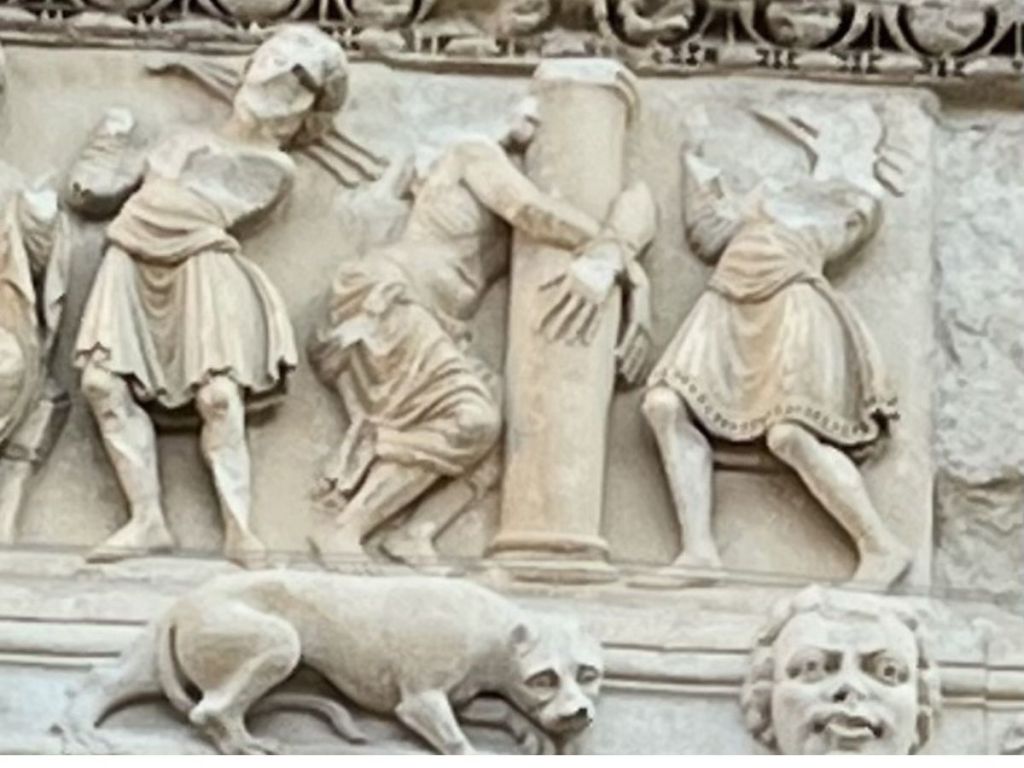
A detail of the extraordinary Romanesque portal of Saint-Gilles Abbey © Algoma
Saint-Gilles Abbey: Where stone speaks of faith, devotion and centuries of pilgrimage
Discover its story
Listed as a UNESCO World Heritage Site, Saint-Gilles Abbey stands as one of the most remarkable Romanesque monuments in southern France.
Not far from Beaucaire, this Romanesque basilica lies along the Way of St. James (Via Tolosana), the historic route linking Arles and Toulouse.
In the early 13th century, Saint-Gilles became the stage for a pivotal moment in Cathar history. When the papal legate sent to confront the defender of the Cathar cause was assassinated after a meeting held in Saint-Gilles, the event provided the pretext for the Albigensian Crusade.
Its monumental façade, with its triple portal rising above a broad flight of steps, is richly adorned with didactic sculptures intended for the faithful. It stands as a striking open book of catechism, where biblical scenes carved in stone still retain their expressive power and emotional depth — something you can truly feel as you stand before them.
New Yorkers may find the entrance familiar: in the 19th century, it served as a model for St. Bartholomew’s Church on Park Avenue in Manhattan.
Built primarily in the 12th century on the site of a 7th-century monastery, and affiliated with the influential Cluny order in the 11th century, the abbey became a major destination for pilgrimage.
With its monumental façade, crypt, and spiral staircase, Saint-Gilles offers an outstanding example of Provençal Romanesque architecture and bears witness to the spiritual intensity of medieval devotion.
This site is another highlight for those interested in historic and religious landmarks in southern France.
Literary connections
The landscapes around Uzès and the Cévennes have inspired generations of writers. André Gide developed part of his early sensibility in this region. → Read more about his ties to the region
Jean Racine spent time in Uzès in his youth, an experience that left a lasting impression. → Discover his connection to Uzès
Curious to see more?
Back in the city, discover other aspects of Nîmes, the French Rome…
If you long for the Mediterranean, head to the Camargue…
For a wilder escape, the Cévennes are waiting to be explored…
And just beyond, the Hérault awaits with its unmistakable joie de vivre…
A step further, the Aude opens the door to a land of wonders…
 Algoma