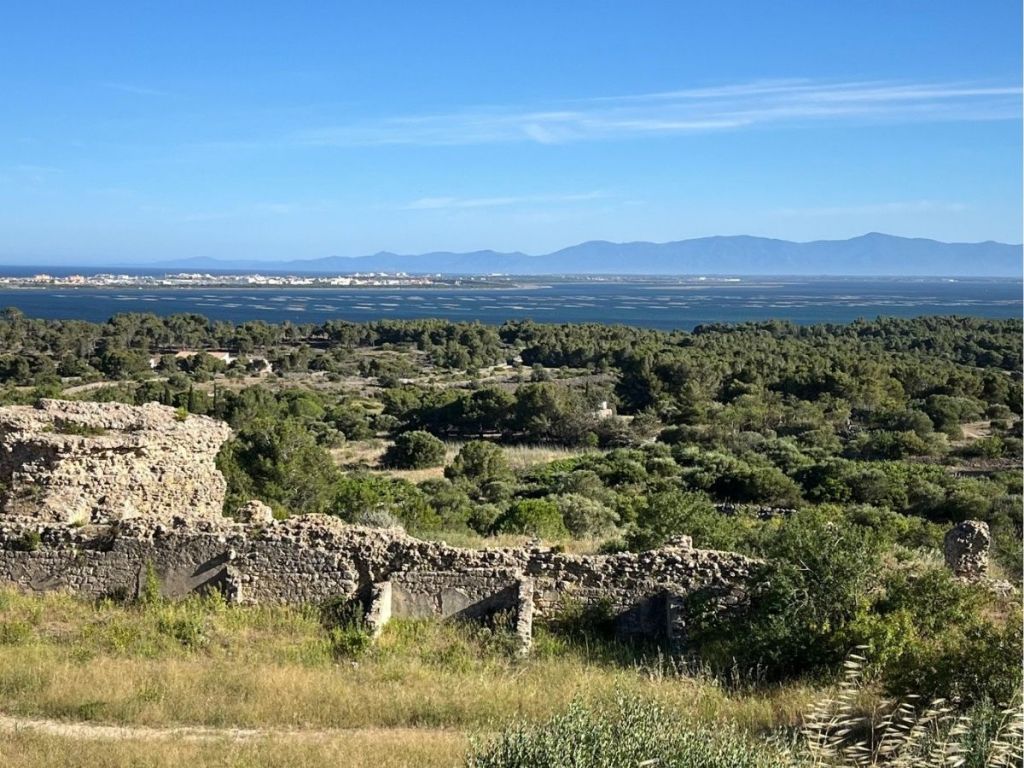
Between sea and lagoon, the Narbonne coast is a land of shifting landscapes — sandy beaches, salt pans, limestone hills, vineyards, and villages shaped by centuries of life between land and water.
From Narbonne Plage to Gruissan and Leucate, the coastline reveals very different faces: seaside resorts, medieval remains, marinas, fishing traditions, and vast lagoons opening onto the Mediterranean.
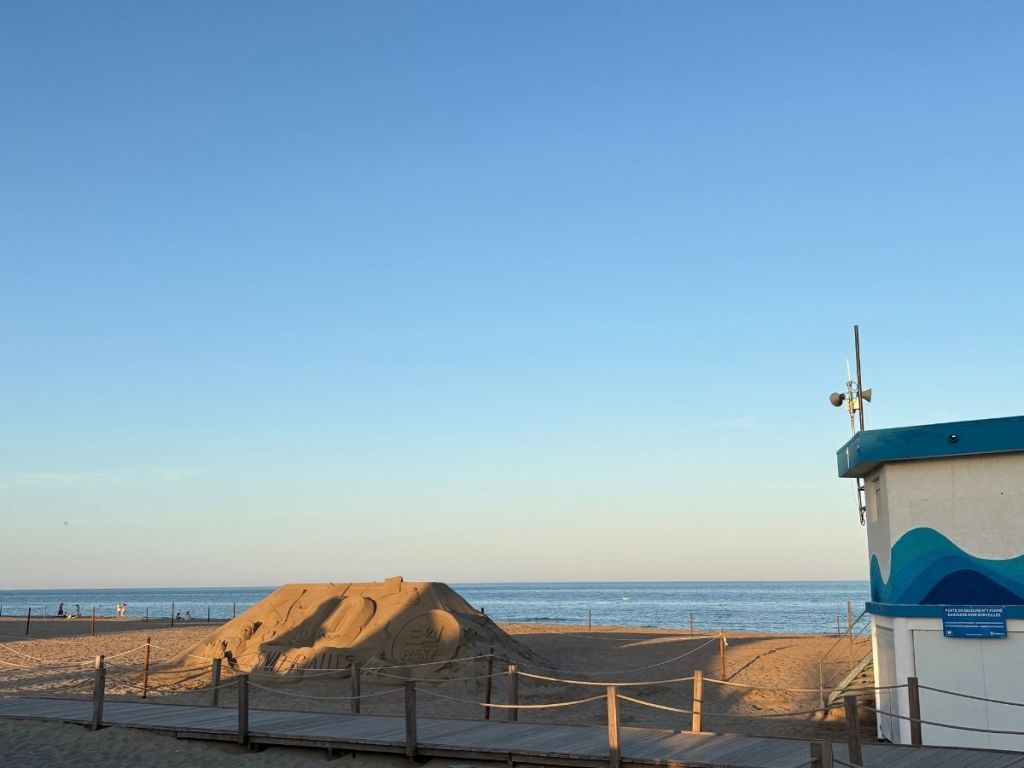
The fine sandy beach of Narbonne Plage ©Algoma
Narbonne Plage:
Narbonne by the Sea
Narbonne is not merely a city rich in history and lively streets where life is good and dreams come easily, but also a city just a short distance from the sea. And for anyone who loves sunbathing and swimming, that is, of course, delightful.
Discover its story
While Narbonne is certainly not a seaside resort today, it is worth remembering that in ancient times, Narbo Martius was a major Roman colony. Situated on the Aude River near the sea, it was one of the most prosperous ports of antiquity—said to be the second most important port in the western Mediterranean after Rome.
In reality, however, it is difficult to determine exactly what the Narbonne coastline looked like back then.
This stretch of coast is characterized by a system of lagoons that has shifted over the centuries—if only because the course of the Aude River itself has changed. Notably, it was during a violent flood in the 14th century that the river abandoned its old course (which ran west of Narbonne’s old town) and turned northeast to reach the Mediterranean.
That hardly matters, though. What is interesting is the unique configuration of the coast in this area: on one hand, a shifting sandy barrier separates the sea from a vast network of lagoons connected to the Mediterranean by three inlets; on the other, limestone massifs—some of them stunningly beautiful—stand alongside fertile, low-lying agricultural plains.
Although the city of Narbonne lies less than 20 kilometers from the beach, there is no easier—or more beautiful—way to get there than by crossing the Massif de la Clape and following its wine route (yes, this is a region rich in exceptional vineyards) to arrive at… Narbonne Plage.
Here, modernity has truly made its mark: a spacious esplanade has been created to make the most of the view on the sea, while the promenade is dotted with terraces, places to sit and pergolas that invite you to savor the moment. It comes as no surprise, then, to find the name of Charles Trenet gracing the seaside promenade.
Here, as always, the sea awaits with its miles of fine sandy beach. But be warned: the region is dominated by a dry wind known as the Cers—while it certainly clears away the clouds, it also whips up the sand. What’s the American phrase? Nobody’s perfect…? That won’t stop us from taking a dip, though.
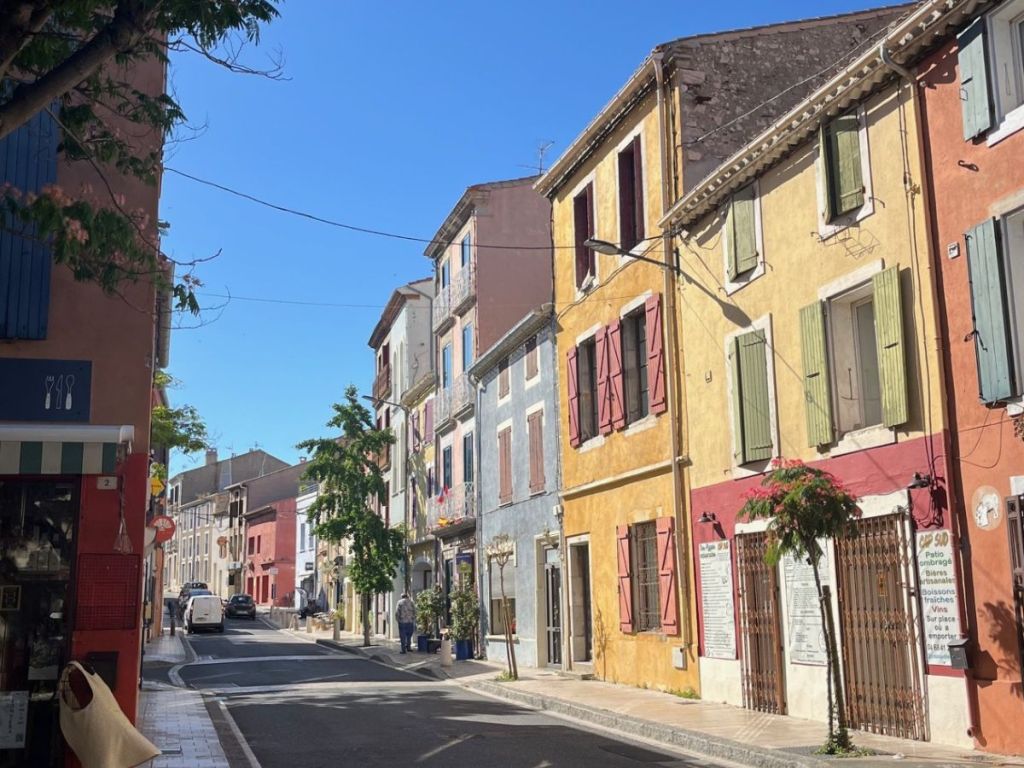
The old village of Leucate ©Algoma
The many faces of Leucate
Leucate—the white one—discovered by the Greeks, who are said to have named it after Lefkada, an Ionian island with white cliffs, which itself took its name from its color (“leukos” meaning “white”).
Discover its story
Leucate—with its 18 kilometers of fine sandy beaches; sand that, to this day, serves as a reference in France and internationally for testing the strength of cement.
Leucate—home to a marina developed as part of the Mission Racine project for the Languedoc coast. Part of the development was entrusted to Georges Candilis—a Greek architect, perhaps in a nod to the village’s etymological roots?—who favored white facades, flat roofs, and cubic forms, whereas his successor, Michel Duplay, opted for warm-colored facades, traditional tiled roofs, and buildings featuring loggias or other projecting structures.
Leucate—a place where cliffs, lagoons, and the Mediterranean Sea coexist; where leisure resorts sit alongside age-old economic activities rooted in the sea and agriculture; and where wind-swept natural beaches meet family-friendly shores.
Leucate is a place of contrasts, comprising an old village and a marina, flanked to the north by La Franqui—a seaside resort whose development began in the late 19th century that has retained its delightfully old-fashioned, authentic charm—and to the south by a naturist site featuring a complex of villages built in the 1970s. Between these two extremes, near the marina, lies Leucate Plage, a seaside resort established in the early 20th century.
The old village of Leucate is well worth a visit in its own right. With its small, colorful houses, charming narrow streets, a square perfect for a drink, the sunshine, the summer song of cicadas, and the wind rustling through the trees, it offers a truly pleasant atmosphere. To top it all off, a short walk along a small path leads to the ruins of one of the many castles that dot the Languedoc region.
While little remains of the castle itself following its destruction by order of Louis XIV, the view is breathtaking!
From this vantage point, the eye takes in the lagoon and its oyster beds, the sparkling Mediterranean Sea, the rooftops of the old village we just visited, nestled at the foot of the castle, and—in the distance—the peaks of the Pyrenees, stretching from Mount Canigou to the Corbières.
As you head back down from this lookout point, you will be spoiled for choice regarding the rest of your visit. Whether in the seaside resorts of La Franqui or Leucate Plage—dating back as previously said to the 19th and 20th centuries—near the port, or on the beaches themselves, this area offers plenty of opportunities to fully enjoy the pleasures of the seaside.
Interested in venturing out to sea from Leucate?
→ Find a selection of guided tours and activities
If you book through this link, I may receive a small commission at no extra cost to you.
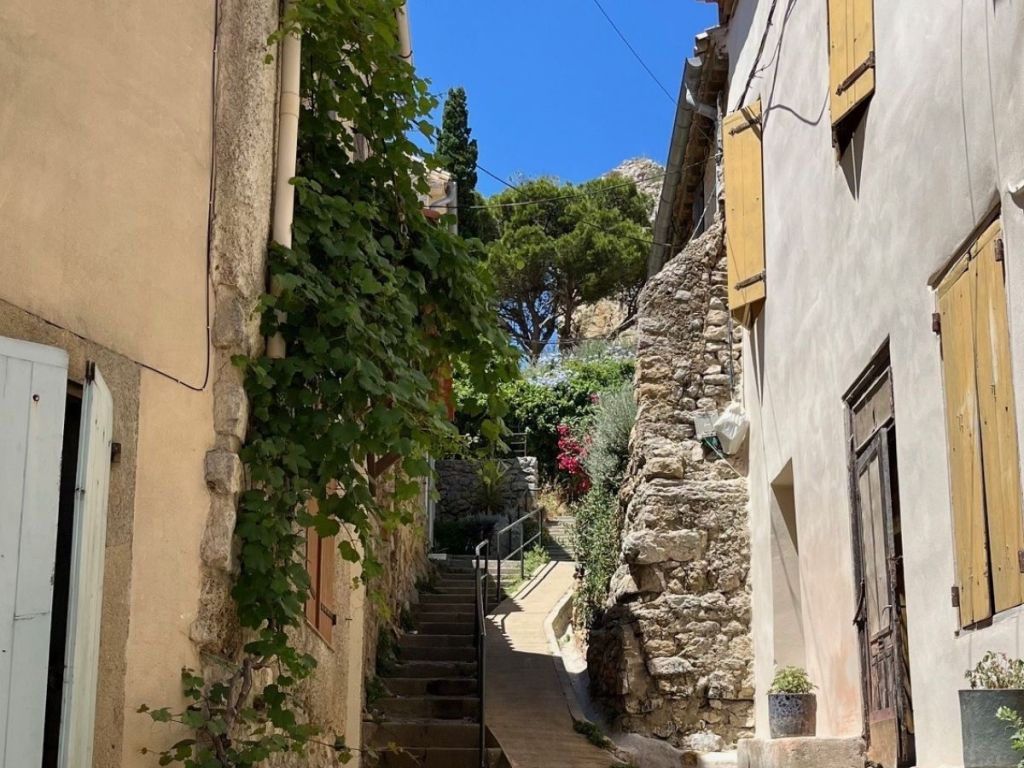
A quiet alley in the old village of Gruissan ©Algoma
Gruissan: A Strategic Vantage Point
When you are coming from Narbonne Plage, after about fifteen minutes on a country road running alongside the sea and then small lagoons, in the distance, you can see a tower rising from a rocky outcrop surrounded by water: this is the village of Gruissan.
Discover its story
Originally—and particularly in ancient times—Gruissan was merely a limestone rock, ideally situated to monitor the sea and defend the city of Narbo Martius. The village took shape at the foot of the castle—built as a defensive fortress to protect Narbonne and its archbishopric—primarily during the height of the Archbishop of Narbonne’s power.
Today, the Barberousse Tower is the most spectacular remnant of the medieval castle, which was destroyed in the 17th century on the orders of Louis XIII and his minister Richelieu—one of the most famous statesmen in French history (see below).
From the top of the tower, it is easy to see why this rocky outcrop served as such a strategic vantage point: the views of the lagoons, the distant sea, the salt pans, the surrounding countryside, and the village rooftops are breathtaking.
The village of Gruissan—built in a circle around the Barberousse Tower—offers a delightful setting for a stroll through quiet, flower-lined streets or for enjoying a refreshing break in the shade of a café terrace umbrella.
Interested in exploring Gruissan’s natural side on an electric off-road scooter?
→ Find a selection of guided tours and activities
If you book through this link, I may receive a small commission at no extra cost to you.
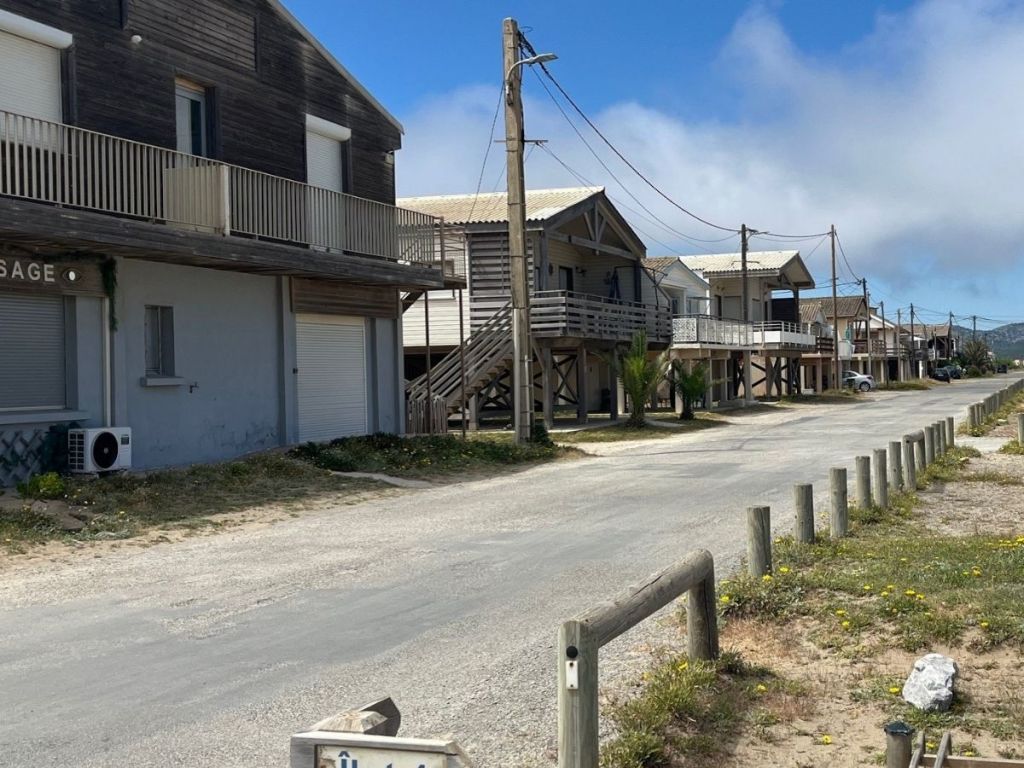
The Gruissan chalets — setting for the cult film 37°2 le matin (Betty Blue) ©Algoma
Gruissan: The Marina
and the Chalets
Leaving the old village of Gruissan for the marina and the “Chalets” area does not mean stepping out of a historic setting: the Gruissan marina was developed as part of the Mission Racine and the original concept of the beach known as “Les Chalets” dates back to the mid-19th century.
Discover its story
The Gruissan marina is thus part of the 1960s coastal development initiative launched by General de Gaulle to encourage tourists from France and Northern Europe to stop on the Languedoc coast rather than heading to Spain for their holidays. This colossal project required draining and filling in vast stretches of water to transform marshlands into a marina that today encompasses three recreational basins.
Admittedly, Gruissan was already a port before this project. However, its activity was limited; the village’s economy relied not only on fishing but also on vineyards, salt pans, and long-haul shipping, and the population was relatively poor prior to the 1970s.
Today, the Gruissan marina strives to remain attractive, notably by continuing to invest in better facilities for recreational boaters and fishermen. The port has been awarded the “Architecture Contemporaine Remarquable” (Remarkable Contemporary Architecture) label and relies on a wide range of events—particularly in summer—to appeal to visitors. The architectural duo behind the project prioritized specific design elements—such as rounded, vaulted roofs, alternating heights and volumes, and staggered loggias—to echo the surrounding landscape of rock, dunes, and the shifting sea.
Just a few kilometers away, the Gruissan chalets emerged from the sands around 1850—initially serving as holiday homes for Narbonne residents during the 19th-century boom in seaside resorts—before being transformed into fishermen’s cabins raised on stilts to protect them from storm-driven waves. Although they have evolved considerably over the decades, the chalets remain a highly distinctive example of seaside architecture. They were destroyed by the Germans during World War II, when the coastline was designated a restricted zone, and rebuilt after the war.
These chalets provided the setting for a film that captivated millions of French people in the 1980s—and one you will almost certainly hear about while there: 37°2 le matin (known to you as Betty Blue). This steamy, tumultuous love story, which culminates in the destruction of the chalet inhabited by the two lovers, is a cult classic by director Jean-Jacques Beineix (you may have seen Diva, which became a hit in the United States and thanks to you, eventually won over French audiences as well).
Today, the rows of chalets—staggered to ensure the maximum number of homes have a sea view—possess a unique character that, to the French, evokes a distinctly Californian vibe.
Interested in gliding across the water on an Aquastepper near Gruissan?
→ Find a selection of guided tours and activities
If you book through this link, I may receive a small commission at no extra cost to you.
Asides

Behind Gruissan’s ruined château stands a decision made in Paris — by Cardinal Richelieu.
Read more
Born in 1585 and died in 1642, this statesman initially entered the service of Queen Marie de Medici (mother of Louis XIII) before serving her son—eventually becoming the King’s preferred advisor over his own mother when conflicts arose between the Queen and the Cardinal. Though he entered the Church for financial reasons, he nonetheless sought to make a genuine contribution to Catholic thought. He is best known for helping strengthen the authority of the State and for acting much like a prime minister, a cunning and ruthless one—particularly in his suppression of the political and military power of the Protestants and of the rebellious nobility.
Known as the “Red Eminence” due to his title and cardinal’s robes—red being the color worn by cardinals, who hold the title of “Eminence” in the Catholic Church—he was a key advisor to the king. However, he himself was said to be advised by Father Joseph, a Capuchin monk (a branch of the Franciscan order founded by Saint Francis of Assisi). Clad in a gray habit, this advisor to the advisor came to be known, by association, as the “Gray Eminence.” To this day, the term “gray eminence” is commonly used to describe anyone who wields power from behind the scenes, hidden behind an official representative.
It was on the orders of Richelieu—who was in direct conflict with the nobility at the time—that the Château de Gruissan was demolished. Today, virtually nothing remains of it but the Barberousse tower, its stones being reused for nearby houses.
Cardinal Richelieu. Detail of a portrait by Philippe de Champaigne. Public domain, via Wikimedia Commons
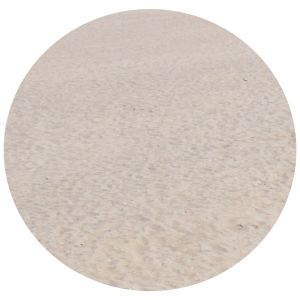
Under the beach, an industry standard—Leucate sand
Read more
Another interesting fact: isn’t it incredible that Leucate remains, to this day, the source of reference sand used to measure and compare cement strength? Well, that is indeed the case! It was selected as a reference for cement testing back in the 19th century.
Even now, the reference sands produced in Leucate undergo rigorous quality checks—particularly regarding particle size—before being sold in over 100 countries across five continents. This is because Leucate sand possesses technical characteristics that are ideally suited for the purpose and is available in large quantities.
Of course, while this standard is used in many countries, it isn’t used in yours. In the United States, you’ve developed your own reference system—which makes perfect sense given the scale of your local needs! 😉
Leucate’s sand — fine and remarkably consistent—a reference standard for cement testing since the 19th century.
Want to explore further?
Discover the spectacular medieval world of Carcassonne, the Iconic Citadel…
Explore Narbonne, where Roman, medieval, and Mediterranean history meet…
And if you’re after strong emotions, discover the castles, abbeys, and landscapes of the Inland Aude…
And just beyond, two neighboring lands await: one where the Mediterranean meets la joie de vivre — discover the Hérault… and another, a step further, where Rome, wild landscapes and the sea meet — explore the Gard…
 Algoma