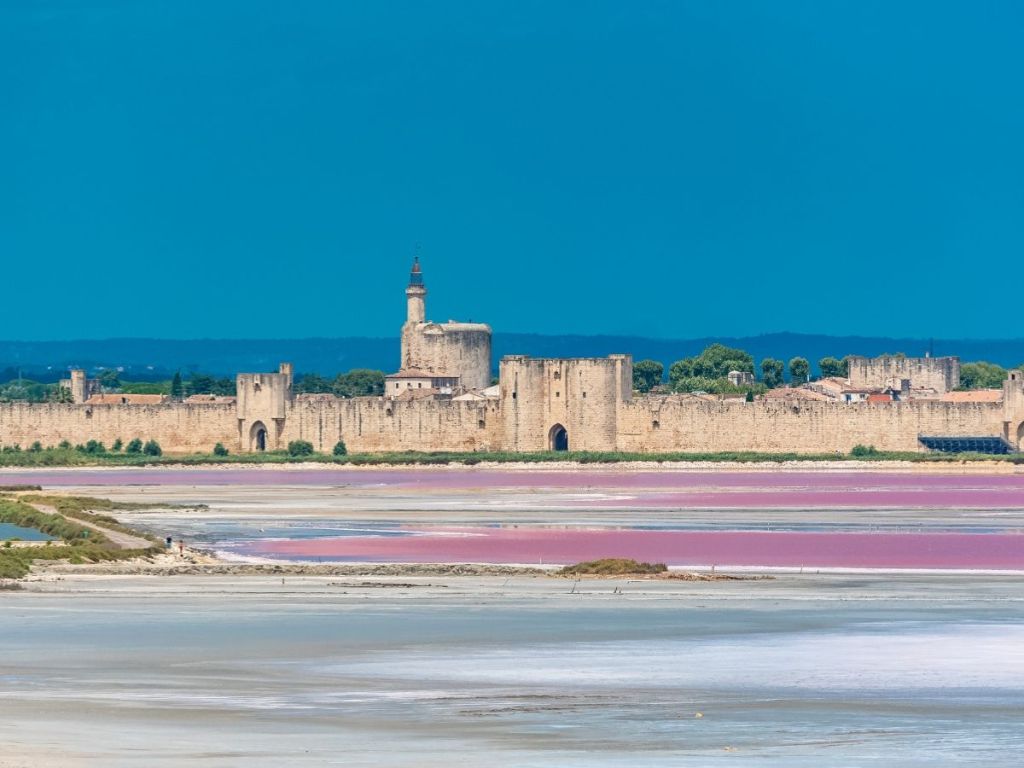
Medieval ramparts, fishing harbors and the wild landscapes of the Camargue reveal a different Mediterranean — untamed, luminous and deeply authentic
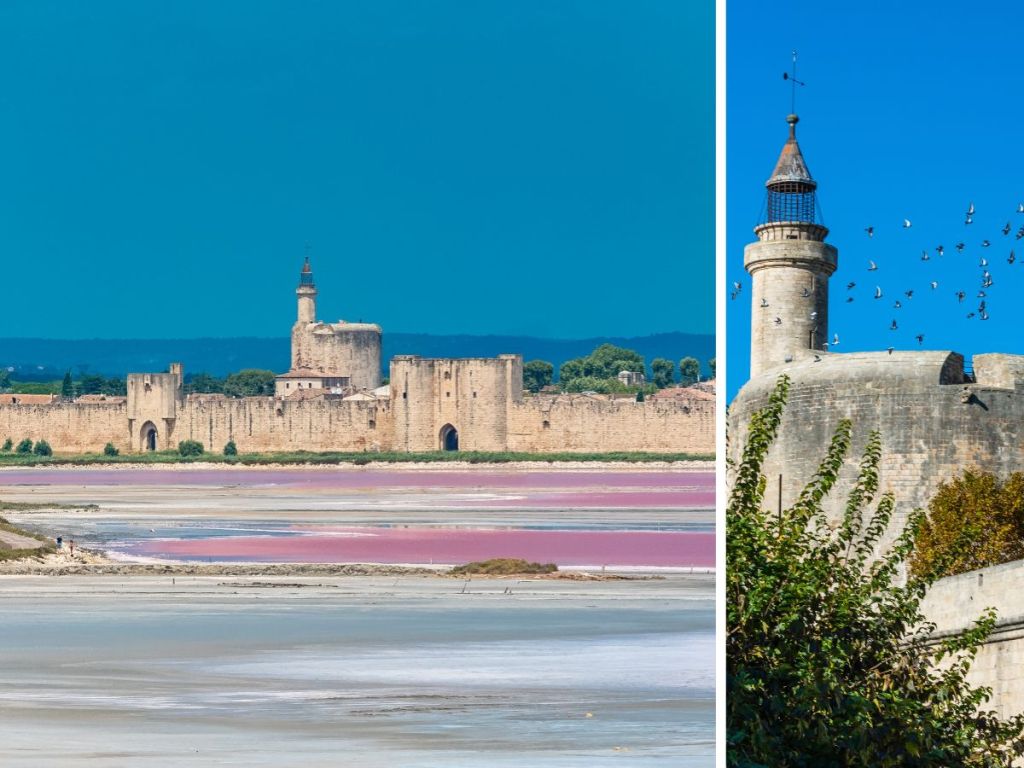
Aigues-Mortes and its pink salt marshes © Ville d’Aigues-Mortes
Aigues-Mortes: A medieval fortress facing the pink salt marshes
Discover its story
Aigues-Mortes is one of the most unique places to visit on the Mediterranean coast of France. This remarkable town takes you back to the architectural splendor of the Middle Ages. Founded by Louis IX of France around 1240, it gave the kingdom access to the Mediterranean and served as a departure point for the Crusades — that incredible period of Western military expeditions meant to spread the Catholic faith – and generate wealth along the way.
Surrounded by perfectly preserved ramparts, Aigues-Mortes is striking from the very first glance. You can spot it from afar thanks to the elegant Constance Tower, rising above the fortified walls.
Yet this tower also holds a more somber history. For centuries, it served as a prison — notably for Protestant women during the religious conflicts that deeply affected the region, including nearby Nîmes.
Today, the atmosphere is entirely different. From the tower and the ramparts, you can enjoy sweeping views over the medieval town, the surrounding countryside, and the vast salt marshes, whose pink and purple reflections shift with the light.
Take time to explore these landscapes more closely. Whether on foot, by bike, by boat or even by a small tourist train, the area offers many ways to discover its unique natural setting — including its famous pink flamingos.
And if you’re curious about salt and its traditions, a visit to the La Baleine shop is well worth it. A familiar name in French households since 1934, the brand offers a wide variety of salts, from delicate fleur de sel to coarser varieties sourced from different regions.
As you wander between stone walls and shimmering marshes, Aigues-Mortes reveals a landscape where history and nature softly meet.
Interested in visiting Aigues-Mortes?
→ Explore guided tours and experiences
If you book through this link, I may receive a small commission at no extra cost to you.
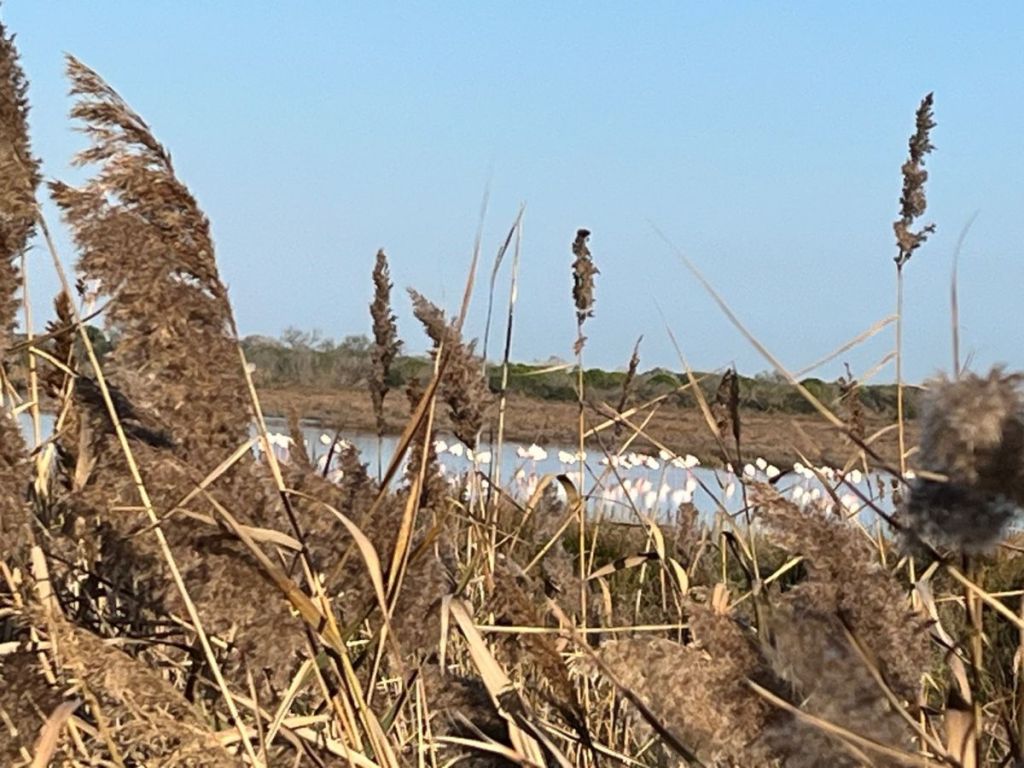
Flamingos in the Camargue marshes © Algoma
The Camargue Regional Natural Park: A world apart, shaped by water, land and tradition.
Discover its story
As you enter the Camargue, you step into a landscape unlike any other — a vast delta where the Rhône River meets the Mediterranean. The Camargue is one of the most distinctive natural regions in the South of France, famous for its wildlife, traditions and landscapes.
This unique region forms a triangle between the inland city of Arles and the coastal towns of Le Grau-du-Roi and Saintes-Maries-de-la-Mer. It is one of the most distinctive natural areas in France, shaped by the slow movement of water and the interplay between land and sea.
The diversity of landscapes is striking. You’ll pass farmland growing wheat, rice and vines, then wide expanses of ponds and marshes where bulls and white horses roam freely. Along the coast, salt marshes stretch toward the horizon, often glowing with soft pink hues and dotted with flamingos.
But the Camargue is not only about nature — it is also about people and traditions. Manadiers, the breeders of bulls and horses, continue to shape this land and are often happy to share their way of life. You may have the chance to attend a course camarguaise, a traditional form of bull-running where the animal is never harmed.
The region is also known for its vibrant cultural life, influenced in part by Roma communities who gather here, especially in Saintes-Maries-de-la-Mer, bringing music, dance and a lively atmosphere.
As you explore the Camargue, you quickly realize that it is more than a landscape — i it becomes an experience you won’t forget.
Ready to visit the Camargue?
→ Explore guided tours and experiences
If you book through this link, I may receive a small commission at no extra cost to you.
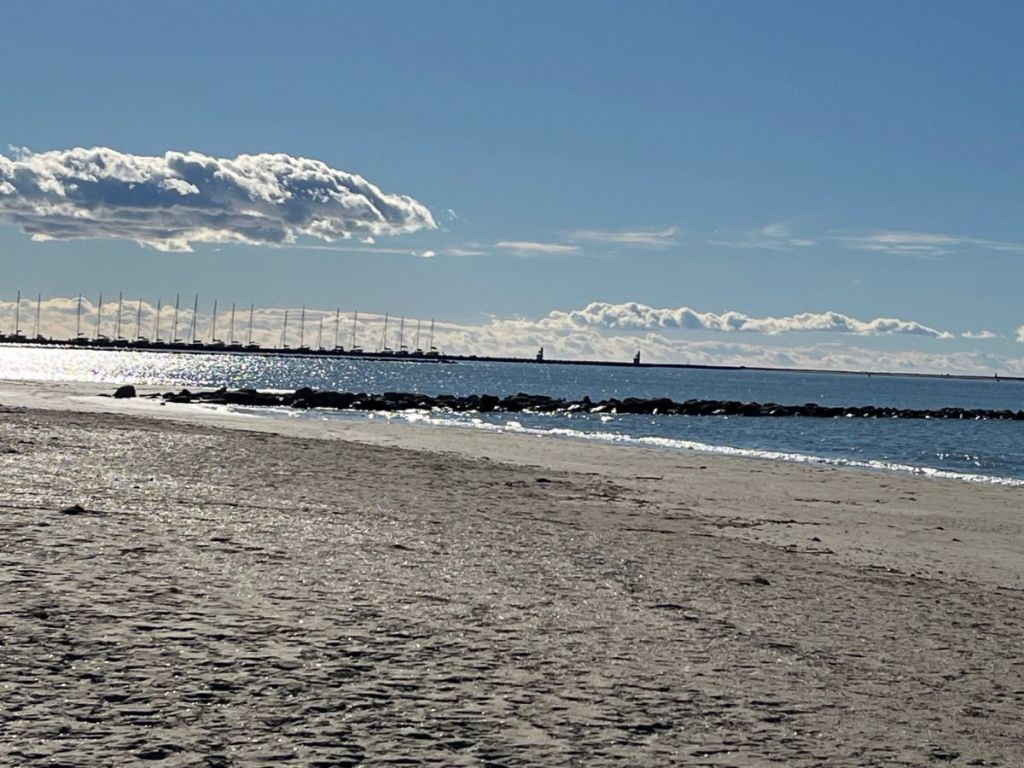
The beach and harbour of Le Grau-du-Roi © Algoma
Le Grau-du-Roi: Stepping into the Mediterranean
Discover its story
Here we are! The Mediterranean Sea — the one that has shaped cultures, inspired Impressionist painters, and continues to fuel the dreams of travellers, writers, and songwriters alike.
In the Gard, the starting point of our journey through southern France, access to the “Big Blue” is limited. On the map, the department looks almost like a speech bubble in a comic strip, stretching toward the sea in a narrow extension. At its tip lies Le Grau-du-Roi, where one of the outer arms of the Rhône delta finally meets the Mediterranean.
The word “grau” comes from Occitan, the historical language of southern France, and refers to the natural passage where a river flows into the sea. For centuries, controlling this fragile opening was essential to allow boats to navigate safely and support local activity. Early plans for a port here were completed around the time of the assassination of King Henry IV in 1610.
A brief historical aside: Henry IV oversaw the Wars of Religion that devastated France – especially the Gard region – in the 16th century. A great peacemaker, he converted from Protestantism to Catholicism and authorized Protestant worship through the Edict of Nantes in 1598; he died in 1610 killed by a fanatical Catholic.
The port was first named Grau-du-Roi-Henri in his honour, before being renamed during the French Revolution, when references to the monarchy were removed.
Today, Le Grau-du-Roi is one of the leading fishing ports on the French Mediterranean coast, particularly known for trawling. Its charm lies in its working-port atmosphere: a canal running through the town centre, small colourful houses, and the elegant Pont tournant du Grau-du-Roi, whose rotating mechanism still opens for boats.
It is also a relaxed seaside resort, shaped by markets, maritime traditions, and seafood restaurants serving the daily catch. Just a few minutes away, the vast and windswept Plage de l’Espiguette stretches for kilometres — a wild coastline that feels unexpectedly untouched.
For those looking for beaches in the South of France, this is one of the most authentic coastal towns to experience. A step into the Mediterranean, and already a world of its own.
Ready to enjoy life in le Grau-du-Roi?
→ Explore guided tours and experiences
If you book through this link, I may receive a small commission at no extra cost to you.
Want to explore further?
Back in the city, discover some nice stories about Nîmes…
If you have more time, explore these best day trips from Nîmes…
For a wilder escape, the Cévennes are waiting to be explored…
And just beyond, the Hérault awaits with its unmistakable joie de vivre…
A step further, the Aude opens the door to a land of wonders…
 Algoma