Between sea and lagoon, the Hérault coast is a world apart — Sète floating on the water like a southern Venice, Cap d’Agde rising from ancient volcanic rock, La Grande-Motte surprising with its audacious 1970s pyramids.
Along this Mediterranean shoreline, the pleasures are simple: oysters fresh from the Thau Lagoon, long sandy beaches, and the shimmering light of the Big Blue.
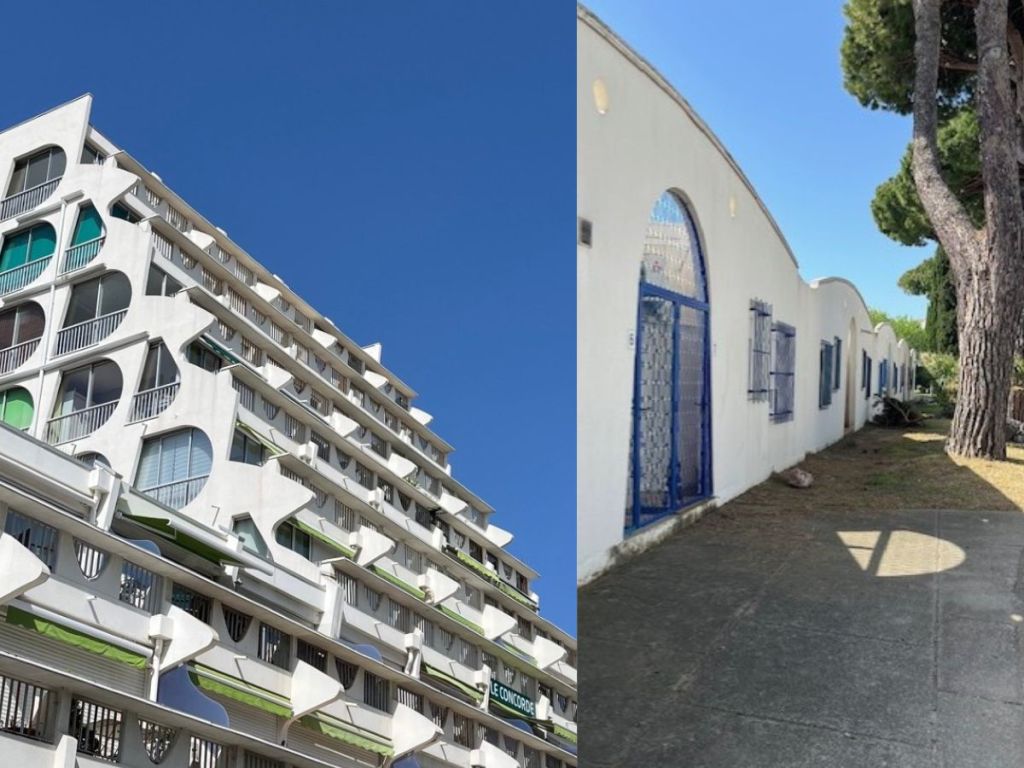
La Grande-Motte: bold pyramids and quiet curves © Algoma
La Grande-Motte. Like a 1970s mirage brought to life.
Discover its story
La Grande-Motte is an architectural marvel on the French Mediterranean coast not to be missed.
Initiated under General de Gaulle, who was concerned that French and northern European tourists were flocking to Spain for their holidays due to a lack of affordable seaside destinations in France, the resort was designed from the outset to welcome visitors even with limited means. This part of the Languedoc coast was then sparsely populated, being marshy and infested with mosquitoes (which, admittedly, haven’t completely disappeared from the landscape).
On this vast expanse, an architect designed the town in its entirety. Jean Balladur chose concrete to realize his project. The town was conceived according to a highly structured and theoretical plan, with a section to the east featuring feminine curves and a section to the west characterized by a more masculine rigidity. The pre-Columbian-inspired pyramids were the first to emerge from the dunes, followed in quick succession by the other buildings.
Each building features a decorative mesh of bold geometric shapes, reminiscent of sails, bikinis, sunglasses, and even General de Gaulle’s nose—ah, the irreverence of the 70s! 😉 The whole forms a strikingly inventive architectural landscape unlike any other seaside resort in southern France.
Initially heavily criticized and still compared by some to disadvantaged suburbs, the project has found a remarkable balance between concrete and vegetation, to which the architect gave pride of place from the outset. Strolling along the pedestrian walkways of La Grande-Motte is a real pleasure, sheltered from wind and sand by the protective layout of the buildings.
And if, like so many of us, you love the beach and the sea, there it is, the Mediterranean – the famed Big Blue – just a stone’s throw away, shimmering in ever-changing, sparkling, reflections, inviting you to swim, sunbathe or simply enjoy quiet seaside contemplation on the long sandy beaches of southern France.
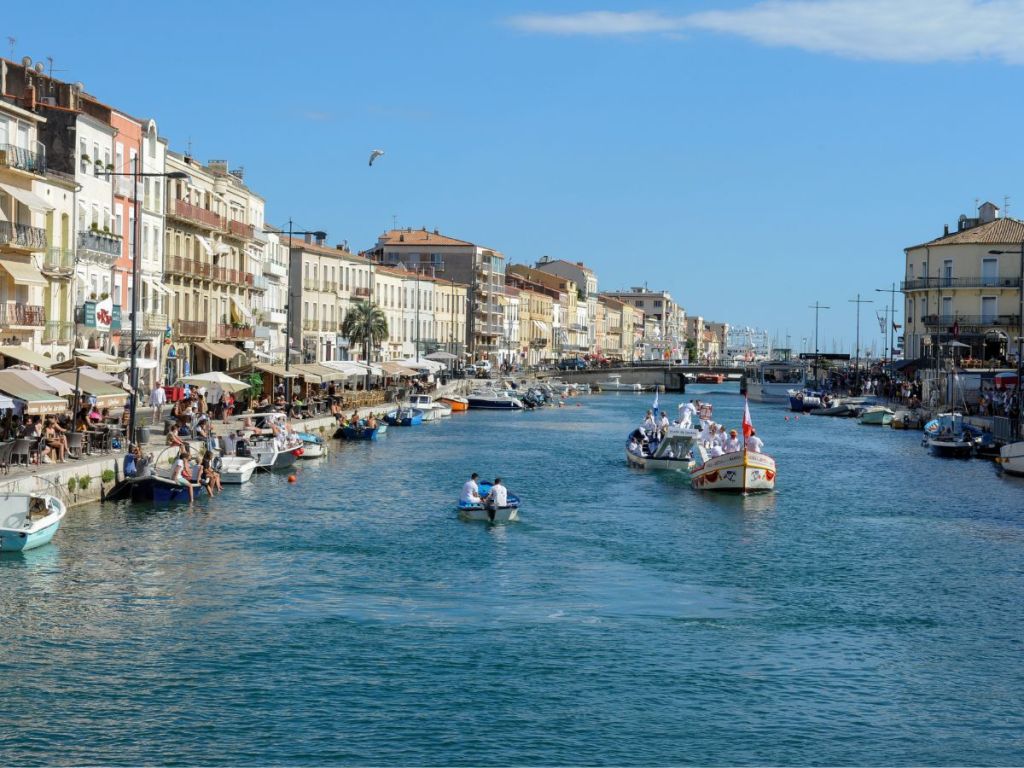
Sète’s Royal Saint-Louis Festival © Joutes_M_RICARD_OT-THAU
Sète,
the Venice of Languedoc.
Discover its story
Sète certainly deserves its nickname of Venice. Of course, there are Venices all over France -and elsewhere. After all, in the United States, from coast to coast, you can find a “Venice” in Los Angeles or Florida ;). Yet this city seems almost to float on the water, with its network of canals, the Thau Lagoon to the north, and the Mediterranean Sea to the south.
We have just seen that the Languedoc coast was developed in the second half of the 20th century, with six seaside resorts created as part of a vast planning scheme. Yet within this urban archipelago devoted to leisure, there are towns that are much older. Sète is one of them. It, too, was born of state ambition. Founded under Louis XIV (the famous king, notably remembered by generations of French schoolchildren for the phrase “I am the State” – whether he actually said it or not), it was established on a narrow strip of land between sea and lagoon to provide an outlet for the Canal du Midi.
Today, a sought-after destination, Sète was for a long time a modest town, first populated by the workers building the port, then, in successive waves, by Italian communities who contributed significantly to the town’s identity and fishing activity.
Curiously, this maritime influence is even reflected in the orientation of Saint-Louis Church. Built at the beginning of the 18th century, it faces the sea—a departure from the traditional eastward orientation of churches —as if to watch over both inhabitants and sailors.
One of Sète’s most spectacular traditions is, if you visit in the summer, is the spectacular water jousting that gives this city its truly Venetian charm. On the main, royal canal, the people of Sète have been competing in these traditional water jousting tournaments since the city’s founding in the 17th century.
Among the many unique features of this multifaceted city, the historic center is called the Upper Quarter because its picturesque, colorful houses lining the narrow streets are built on higher ground than the canals. And indeed, you have to climb a little to enjoy the lively squares and views over the city center.
Likewise, it’s by climbing that you can savor the most beautiful views of the Thau Lagoon on one side and the Mediterranean Sea on the other. From Mont Saint Clair, which rises to 175 meters (and can be reached by car if you don’t feel like hiking up), you can see the kilometers of beaches stretching along the coastline to the east towards the town of Agde. These fine sandy Mediterranean beaches are among the town’s many attractions, while to the west, the port of Sète is clearly visible.
Whether strolling along the Corniche, hiking the trails of the Pierres Blanches forest—where mimosas bloom in February—catching a show at the Théâtre de la Mer with the Mediterranean Sea as a backdrop, or visiting the Paul Valéry Museum, which offers a breathtaking view of the famous Marine Cemetery—another iconic landmark of the town—there are numerous places to enjoy stunning panoramas.
Interested in visiting Sète?
→ Find a selection of guided tours and activities
If you book through this link, I may receive a small commission at no extra cost to you.
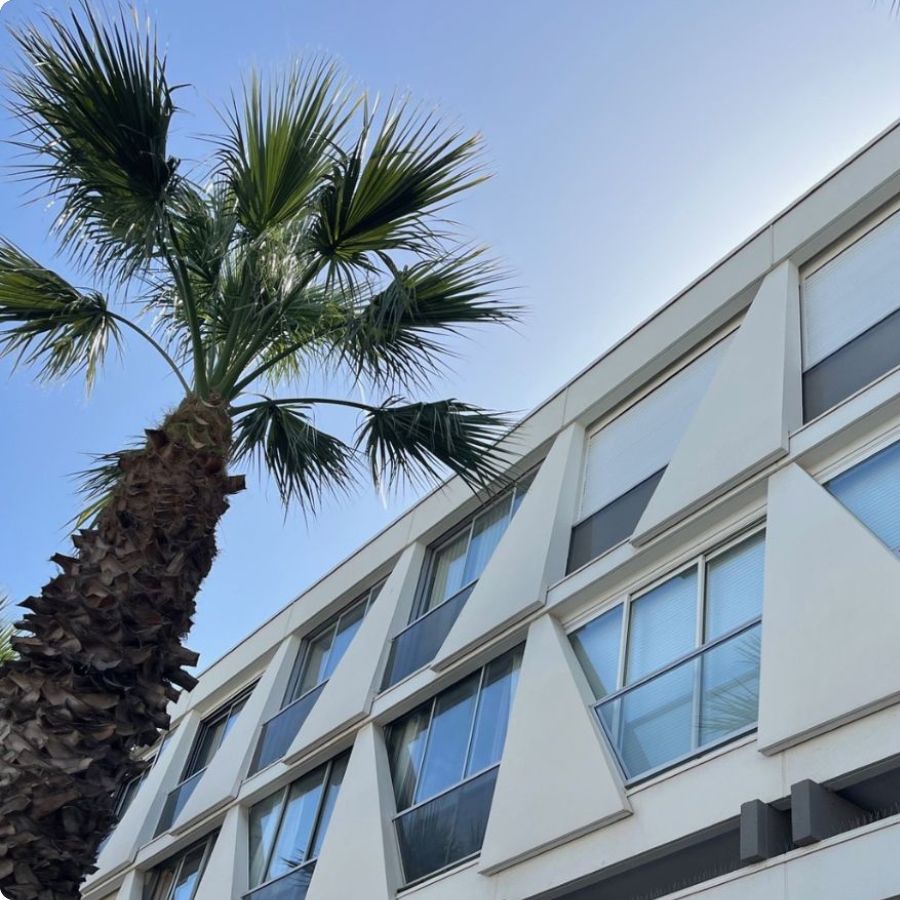
The Languedoc Coast: Planned for Leisure and Nature.
Discover its story
When La Grande-Motte was entirely designed in the 1960s and 70s with the massive use of concrete on sparsely populated land, one can easily imagine bulldozers tearing up the dunes, asphalt paving the roads, and concrete being poured on-site to build futuristic pyramids along the Mediterranean shoreline.
However, contrary to appearances, the ecological dimension was taken into account from the outset. Not only was 70% of La Grande-Motte’s surface area devoted to green spaces, but the project as a whole aimed to create seaside resorts in order to better protect the rest of the coastline and prevent the overdevelopment of the French Mediterranean coast.
Imagine the American coastline developed under such direct governmental impulse. The scale of the project makes one wonder!
The result is that, along 180 km of coastline, the six planned seaside resorts – Saint-Cyprien, Leucate-Le Barcarès, Gruissan, Cap d’Agde, La Grande-Motte, and Port-Camargue – were inserted into a coastline already shaped by historic towns such as Sète and traditional fishing villages, while extensive protected natural zones were preserved between developed areas.
Exploring this protected environment is a delight, from the lively bustle of coastal towns and resorts to long stretches of fine sandy beaches.
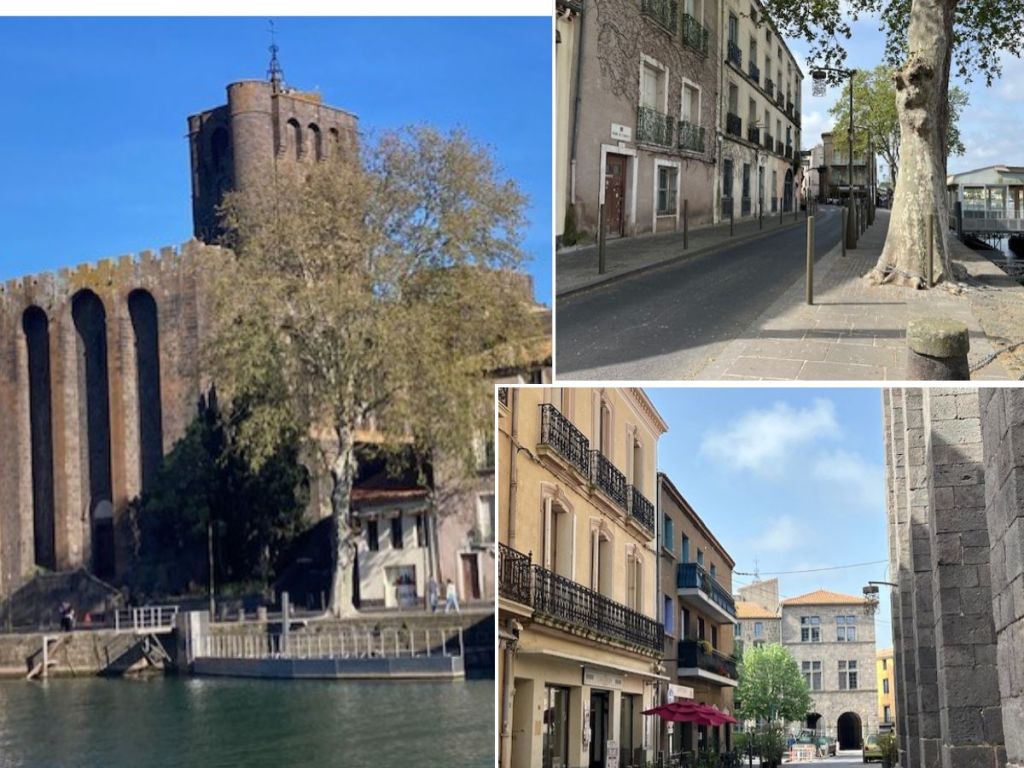
Saint-Etienne Cathedral and the streets of Agde © Algoma
Agde, the Black City.
Discover its story
Agde, founded in the 6th century BC, is one of the oldest towns in France. It labels itself a “Greek city” on motorway signs but is also aptly nicknamed the Black Pearl of the Hérault. This nickname comes from the striking dark color of the volcanic basalt stone used throughout its historic buildings, giving the old town a unique and almost austere identity within the Languedoc region.
Located close to the Thau Lagoon and linked to Sète by a narrow coastal strip, Agde is easily accessible by car, train, or even bicycle. Yet its atmosphere differs greatly from the nearby “Venice of Languedoc”: here, everything feels more grounded, more volcanic, more ancient.
The city owes its distinctive appearance to Mont Saint-Loup, an ancient volcano that was active around 750,000 years ago, located between Agde and the Mediterranean Sea. The black basalt extracted from this site defines the entire architectural identity of the town.
As a result, black stone dominates the urban landscape. The Saint-Étienne Cathedral of Agde, built along the Hérault River, looks more like a fortress than a church. Fortified in the 12th century, it features defensive architecture typical of the region: a massive keep-like tower, machicolations, arrow slits, and ramparts.
Despite its austere exterior, the Romanesque style softens the structure, while the richly decorated Baroque altarpiece inside brings light, color, and contrast to the dark stone walls.
Around the cathedral, the winding cobbled streets lend an undeniable medieval charm to the historic center. Steeped in history, this town center boasts Renaissance-style facades, such as the Consular House built in 1651, also carved from local basalt stone, and still bears the names of games played in the 17th century, like the Place du Jeu de Ballon.
The town of Agde, which thus bears the traces of a rich historical past, has faced challenges in its renovation. The town’s rehabilitation work, which has been ongoing for many years, may finally be bearing fruit. Today, it’s a pleasant place to stop for a drink in the charming atmosphere of a terrace along the Promenade, in the shade of century-old plane trees.
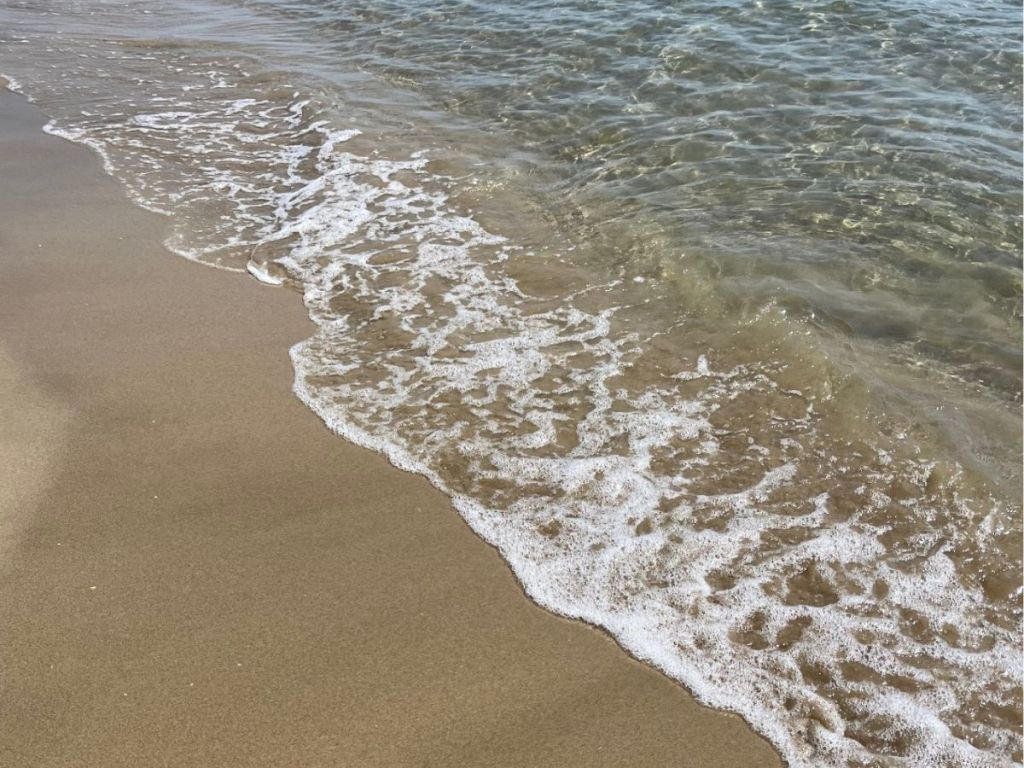
The Mediterranean shoreline at its most quietly seductive © Algoma
Beyond Agde: beaches and villages.
Discover its story
Just a few kilometers from the town of Agde, beach lovers will enjoy a wide variety of landscapes along the Mediterranean coast of the Hérault. This seafront area is part of one of the key sites of the French government’s Racine Mission, a major coastal development program launched in the 1960s (see box just above: The Languedoc Coast), which reshaped much of the Languedoc coastline while preserving traditional fishing villages.
Leaving Agde for the coast, you first discover the modern resort of the 1970s known as Le Cap d’Agde, then Le Grau d’Agde, which historically provided the town with its access to the sea, and, on the other side of the Hérault River, La Tamarissière, a small seaside hamlet traditionally linked to fishing, whose name comes from the tamarisk trees planted there.
This stretch of coastline, with its very different atmospheres, covers several thousand hectares and illustrates the diversity of the Languedoc Mediterranean coast, from modern tourism infrastructure to preserved natural environments.
Cap d’Agde is undoubtedly the most modern seaside resort in the area. Its architectural design, notably attributed to Jean Le Couteur, is often considered remarkable, both for the technical achievement of creating a resort on a marshy and difficult site and for its overall urban planning, with tourist facilities organized around a central port.
Le Grau d’Agde is a village that also developed with tourism, starting with the rise of sea bathing at the end of the 19th century. Fishing activities — including its fish market, which can still be visited early in the morning — along with leisure boating, remain an essential part of local life.
On the other side of the Hérault River, La Tamarissière offers a beautiful pine forest of century-old trees as well as the Verdisses natural site. This more natural area provides access to miles of sandy Mediterranean beaches: La Conque beach, with its distinctive volcanic black sand, Le Môle beach, Richelieu beach, Rochelongue beach… There is plenty of choice, making this one of the most diverse coastal areas in the Hérault.
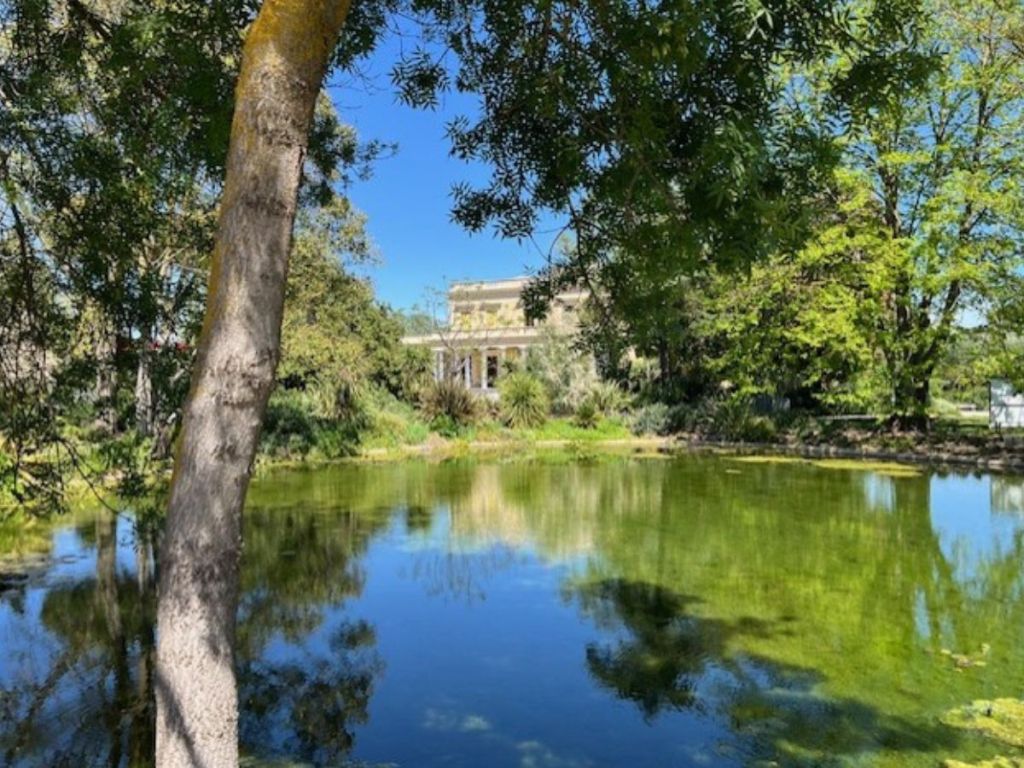
Château Laurens: Art Nouveau dreams mirrored in still water © Algoma
Château Laurens: A 20th-century Folly.
Discover its story
Château Laurens in Agde, on the Canal du Midi and the Hérault River, is a quintessential 20th-century “folie” and one of the most remarkable Art Nouveau heritage sites in southern France.
A brief vocabulary note is in order: for Americans, the term “folly” would usually refer to decorative garden structures, while in French, a “folie” designates luxurious pleasure residence built from the Renaissance onward —especially in the 17th and 18th centuries— by the nobility or wealthy bourgeoisie on the outskirts of cities.
And that is exactly what this residence, commissioned by the young heir Emmanuel Laurens, is all about. Nestled in a park on Belle-Isle in Agde, bordered by the Canal du Midi on one side and the Hérault River on the other, this château, built at the turn of the 20th century, was conceived from the outset not only as Emmanuel Laurens’ personal residence but also as a venue for lavish receptions.
Reflecting the owner’s keen interest in travel, the interior showcases a rich array of furnishings influenced by Orientalism and Symbolism, set within an eclectic décor that prominently features Art Nouveau and its flowing arabesques. Outside, the estate invites you to enjoy a delightful stroll through a landscaped park, accompanied by the sound of the river – and by the rhythm of passing trains that run alongside the property, creating a striking contrast between 21st-century modern life and the tranquility of the estate.
You’ll need to plan ahead for this visit, as reservations must be made on the château’s website. But this small constraint is more than rewarded by the experience you’ll enjoy once there.
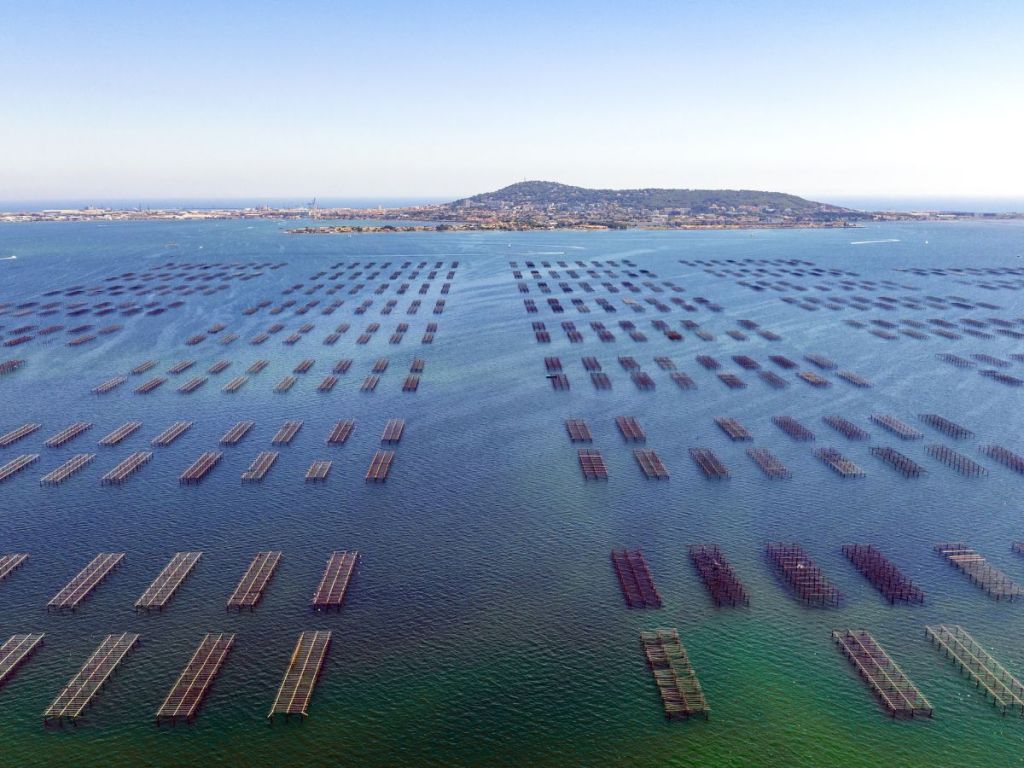
The Thau Lagoon: oyster tables stretching toward Mont Saint-Clair in Sète © G_DELOYE_OT-THAU
Diving, cycling, and savouring life at the Thau Lagoon.
Discover its story
The Thau Lagoon (Étang de Thau), located between Sète and Agde on the Mediterranean coast of the Hérault, is one of the most distinctive natural sites in southern France.
When arriving in Sète, the surrounding hills open onto this vast lagoon, where land and sea seem to merge in a constantly shifting play of light.
Of course, for an American accustomed to wide open spaces, the Thau Lagoon may seem modest in size. But when the train runs along the narrow strip between Sète and Agde and you suddenly find yourself between two shimmering expanses of water, the lagoon rivals the sea itself. The oyster beds on the surface and the villages set along the opposite shore only add to the magic of the view.
Covering a vast area, its waters serve as a rich ecosystem and a refuge for a wide variety of marine life, including seahorses (which, admittedly, you will have to dive to see). On the surface, pink flamingos and migratory birds share the lagoon with vacationers and oyster farmers alike. The most innovative oyster farmers have even developed techniques that mimic tidal movement, enhancing the already distinctive flavor of local oysters.
Along the shores of the Thau Lagoon, nature is protected by a strong environmental policy. This makes it an ideal area for cycling and slow exploration. You can travel from village to village, sampling local oysters and visiting charming towns such as Mèze, Bouzigues, and Marseillan, all part of this unique lagoon landscape between Sète and Agde.
Literary connection
Paul Valéry was born in Sète and took the sea with him — it shaped his entire vision of the world. → Walk with him through the Graveyard by the Sea
Want to explore further?
For a city that pulses with youth and southern light, explore Montpellier…
For hilltop villages, ancient abbeys, and sun-drenched vineyards, wander Inland from Montpellier…
Just next door, to the east, a land where Rome never left and nature still runs wild — discover the Gard…
To the west, a land of wonders — discover the Aude…
Interested in visiting Agde, the Coast and the Thau Lagoon?
→ Find a selection of guided tours and activities
If you book through this link, I may receive a small commission at no extra cost to you.
 Algoma