Our path crosses that of Molière in Pézenas. Admittedly, one must concede that Pézenas is not Stratford-upon-Avon, and Molière—the stage name of Jean-Baptiste Poquelin—is not Shakespeare. And although the town prides itself on being the home of France’s most famous playwright, his actual time there was relatively brief: just a few stays during his twelve years of touring across the French provinces.
However, Pézenas marked an important turning point in his theatrical career, under the patronage of Louis XIV’s cousin, the Prince de Conti. This led Marcel Pagnol—a 20th-century French author—to remark that while Jean-Baptiste Poquelin was born in Paris, Molière was born in Pézenas.
Born in 1622 and dying in 1673, Molière was a contemporary of Jean Racine (whom we encountered earlier in Uzès) and Pierre Corneille. He lived in the heart of the 17th century—an era when the Church often condemned theatre on moral and religious grounds, and when tragedy was still considered the most prestigious dramatic genre—yet he carved out a unique place for himself in the French pantheon.
Also a protégé of King Louis XIV, he wrote famous comedies—works you likely know, given your love of France, and which are still widely studied in French middle and high schools. Inspired by commedia dell’arte, Molière elevated situational comedy to new heights in many of his plays—such as Les Fourberies de Scapin (Scapin’s Deceptions) or Le Malade imaginaire (The Imaginary Invalid)—making them an endless source of entertainment for younger audiences.
At the same time, the accuracy of his perception of the society around him and the subtlety of his analysis of human nature enabled him to write works that address themes of striking contemporary relevance—themes that earned him international stature.
You are undoubtedly familiar, for instance, with his questioning of social conventions in The Misanthrope, his mockery of hypocrisy in Tartuffe, or his exploration of the concepts of freedom and morality in Don Juan…
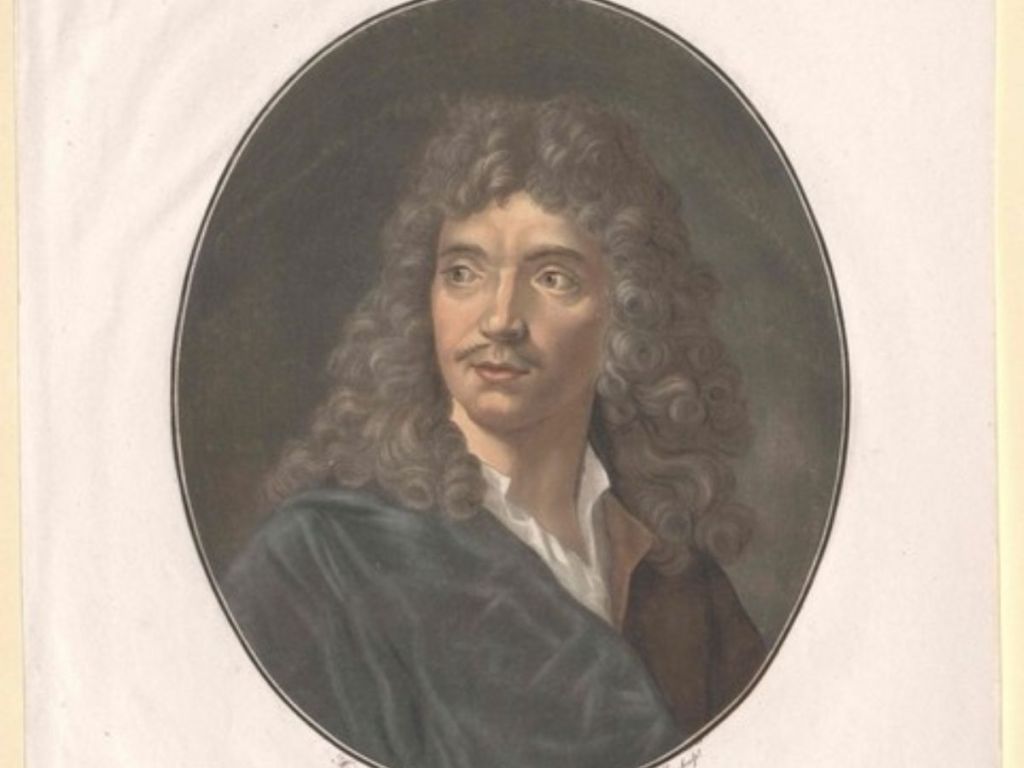
Molière, portrait — public domain portrait engraving — source Picryl.
 Algoma