We came across Rabelais strolling through the paths of the Montpellier Jardin des Plantes (Botanical Garden) when he was studying medicine in the early 1530s. A staple of every schoolchild’s curriculum in France, Rabelais is a major figure of French Renaissance literature.
Rabelais is first and foremost a colorful personality, the apostle of bawdiness and excess, the quintessential bon vivant. A former monk, a doctor, a priest, born in Touraine, in the Loire Valley—the land of wines and châteaux—he is particularly known for these two works, Pantagruel and Gargantua, which recount, with great irony and scatological humor, the adventures of these two giants.
It is to Rabelais that the French owe the expressions “substantifique moelle” (substantive marrow) and “moutons de Panurge” (sheep of Panurge). One refers to the quintessence of a subject—and perhaps we can see here the influence of his medical training on his literary work—the other is taken from the story of one of Rabelais’s characters, a certain Panurge who, to test the stupidity of these animals’ behavior (and by extension, human behavior), throws a sheep into the sea and observes how all the others blindly follow it and drown in the process.
Even today, while Rabelais’s work is not always easy to read due to the language having evolved considerably over the last five hundred years, the author’s wit remains highly entertaining and very relevant.
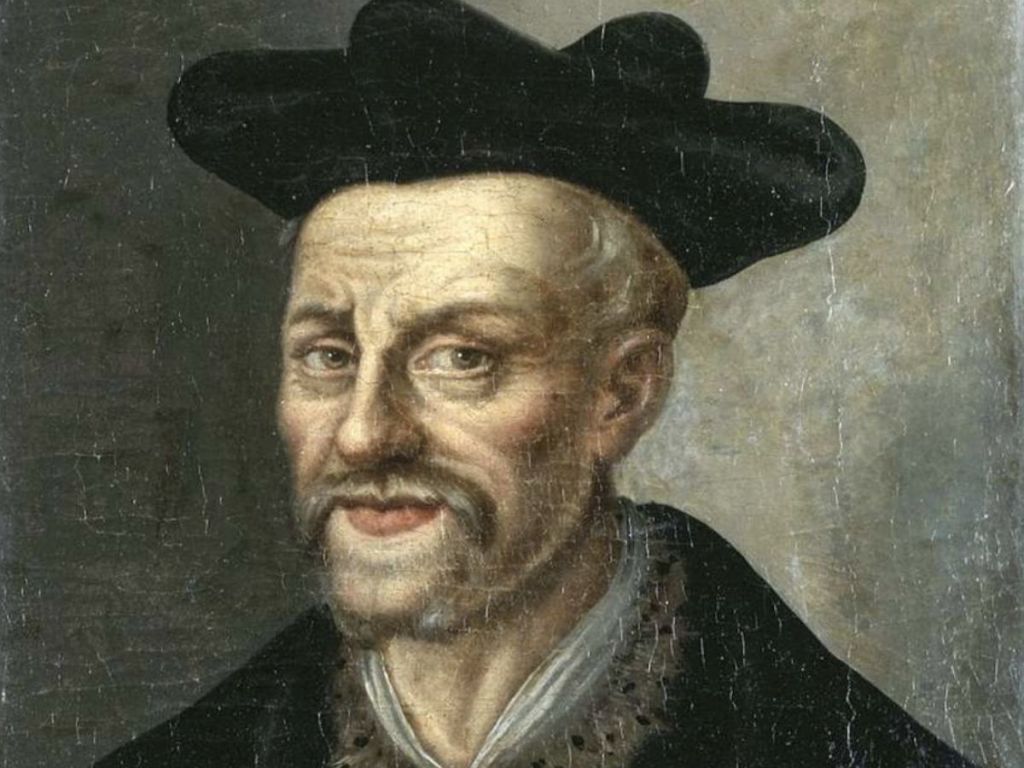
Portrait of François Rabelais (c. 1483–1553), physician, humanist, and great author of French Renaissance literature. Photo: Anonymous 17th-century portrait Source: Picryl (public domain).
Interested in visiting Montpellier?
→ Find a selection of guided tours and activities
If you book through this link, I may receive a small commission at no extra cost to you.
 Algoma