Upon arriving in Montpellier, the capital of the Hérault department in southern France, you’ll discover one of the country’s major cities. Montpellier is dynamic and enjoys a strong population growth, it also prides itself on its economic activity and large student population, which brings a youthful energy to the streets.
The city center is lively, and Montpellier —divided into distinct neighborhoods—reveals many different facets. In its long-standing rivalry with its close neighbor Nîmes (isn’t it amusing –even rather endearing– that in France, as in the United States, neighboring cities often share a long-standing rivalry ;)), Montpellier has clearly won the race for attractiveness. It is this multifaceted city that we will now explore.
In this southern French city, life feels wonderfully easy and strolling through the streets is a pleasure.
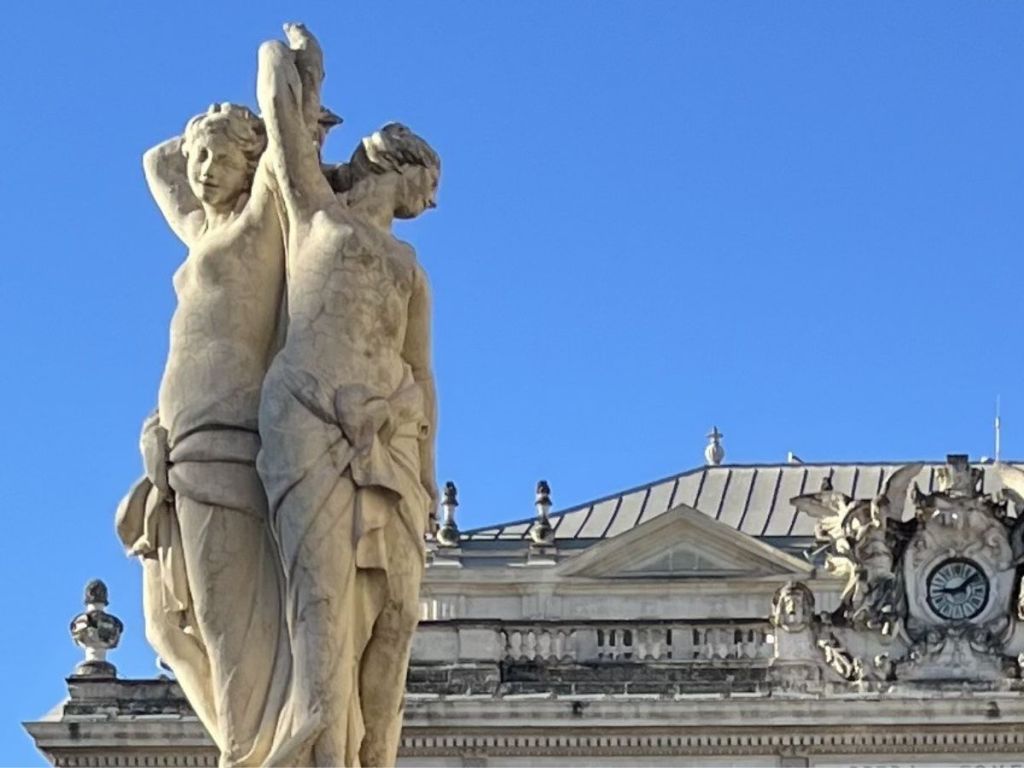
The Three Graces, presiding over Montpellier’s grand central square. ©Photo: Algoma
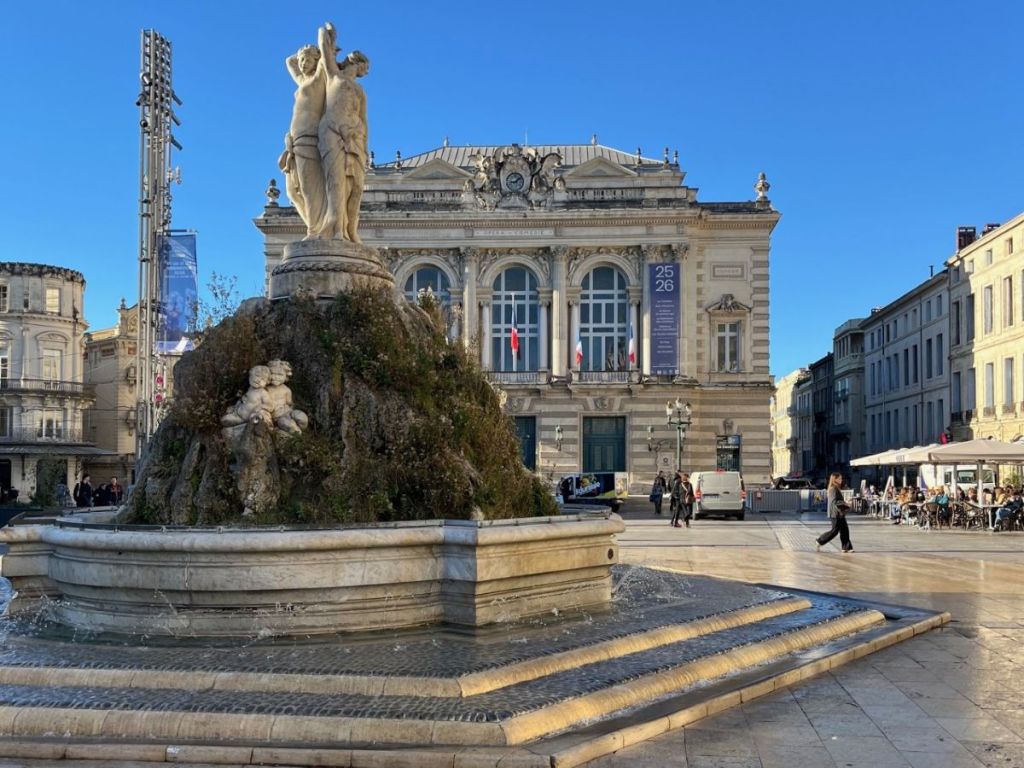
Place de la Comédie, Montpellier’s iconic central square.
Discover its story
Place de la Comédie is the natural heart of the city. This large and distinctive square, crossed along its southern edge by Montpellier’s iconic tram line, is almost an unavoidable passage for residents.
Vast, bright, bustling, lively, and cultural, it stands out for the presence of the Opera House, which gives the square its name, and by the Fountain of the Three Graces, which springs from the central “Egg.”
Originally designed in the 17th century, it was redesigned in the 19th century and, in the process, acquired some notable Haussmann-style buildings, such as the Gaumont cinema on the northern side of the square, giving the city an air of Paris—quite unusual in the south of France.
Located in the heart of the Ecusson – a term frequently given to city centers in France due to their shield shape– Place de la Comédie provides access to the city’s various districts: the Promenade du Peyrou, 17th- and 18th-century mansions, Saint Peter’s Cathedral and the botanical garden, the must-see Fabre Museum… right up to the first steps leading to the Antigone district – emblematic of late 20th-century modernity…
It’s impossible not to come across this square, and in doing so, you soak up the city’s energy and experience being fully part of it.

Louis XIV surveys his city from the majestic Promenade du Peyrou. ©Photo: Algoma
Strolling in the shade of the Sun King’s magnificent square.
Discover its story
Your first stroll in Montpellier will take you to the panorama that unfolds to the east of the city at the far end of the majestic Place Royale du Peyrou.
Once past the triumphal arch erected at the end of the 17th century, -watch out, a short stretch of road with some traffic still lies at the entrance- you reach the magnificent Promenade du Peyrou.
At the center of the Place Royale, you can’t miss the equestrian statue of Louis XIV. The statue was finally erected long after the king’s death and after the upheavals of the French Revolution, during the Restoration, under Charles X (great-great-grandson of Louis XIV and brother of Louis XVI!).
On either side of the square, the rows of plane trees give a delightful shade and strolling there feels like a blessing – especially on summer days! –. At the far end of the square stands the water tower, marking the endpoint of the Saint-Clément aqueduct. Both were built in the 18th century to bring water to the city.
From the overlooking terraces, you can see the eastern districts of the city, as far as the Pic Saint Loup, weather permitting; turning back, you can admire this monumental ensemble in all its scale and historical perspective.
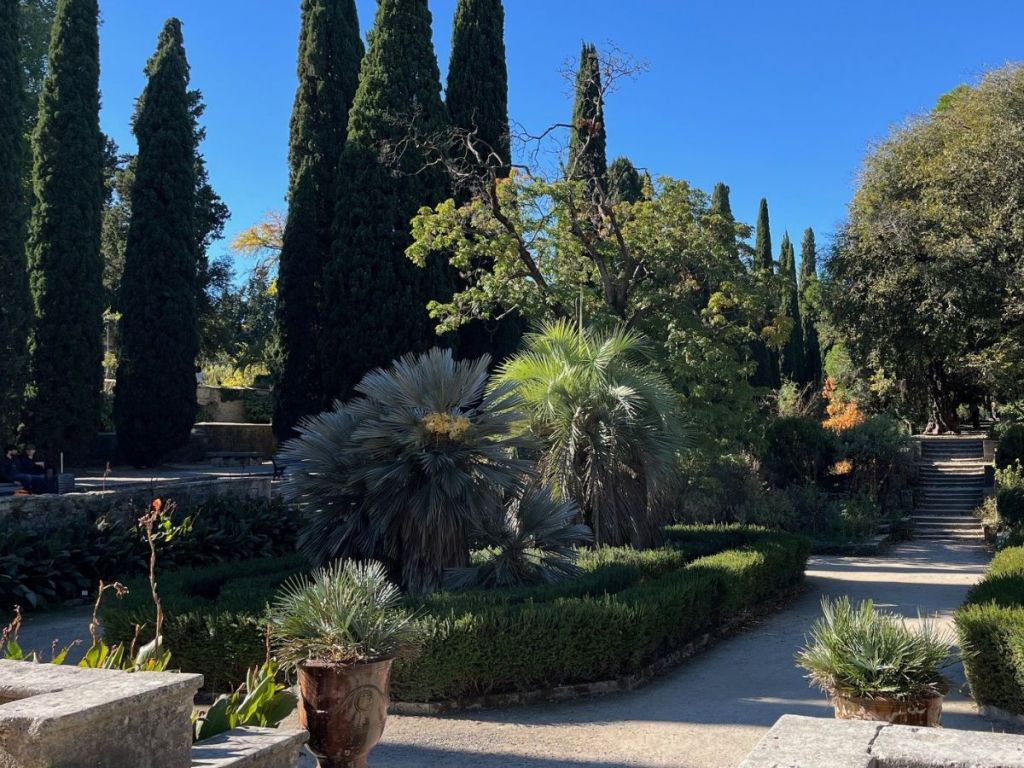
The Jardin des Plantes — where classical French garden design meets the wild exuberance of the Mediterranean. ©Photo: Algoma
The Jardin des Plantes,
a delight for science – and for the senses.
Discover its story
Just a few steps from these terraces lies one of those wonderful gardens where we so love to stroll. The one in Montpellier has roots stretching back to the late 16th century.
It is the oldest botanical garden in France, linked to the University of Montpellier since its very beginnings – it’s moving to think that Rabelais, the colorful 16th-century French author known to every school student in France, studied there during his medical training.
This remarkable place offers a rich variety of atmospheres: from the rectilinear flowerbeds of a classical “jardin à la française”, to the essential greenhouses and orangery needed to protect delicate plant varieties, to shadier areas such as the English garden and the bamboo grove – both created in the 19th century – or even the famous “Queen’s Garden”.
Even older, dating back to the 13th century – the queen in question is Marie of Montpellier, Queen of Aragon, born around 1180 and who died in 1213. Secret and romantic, this garden within a garden feels particularly mysterious. It is here that the legendary tomb of Narcissa can be found, a monument commemorating the spot where the English poet Edward Young is said to have buried his daughter-in-law in 1736.
Rich in aromatic plants and flowering beds – jasmine, roses, honeysuckle mingling their fragrances, creating an intoxicating atmosphere, the Jardin des Plantes still fulfils an important educational role today. Visitors can join the tours generously offered by the university and its partners. Be sure to check the tour schedule beforehand.
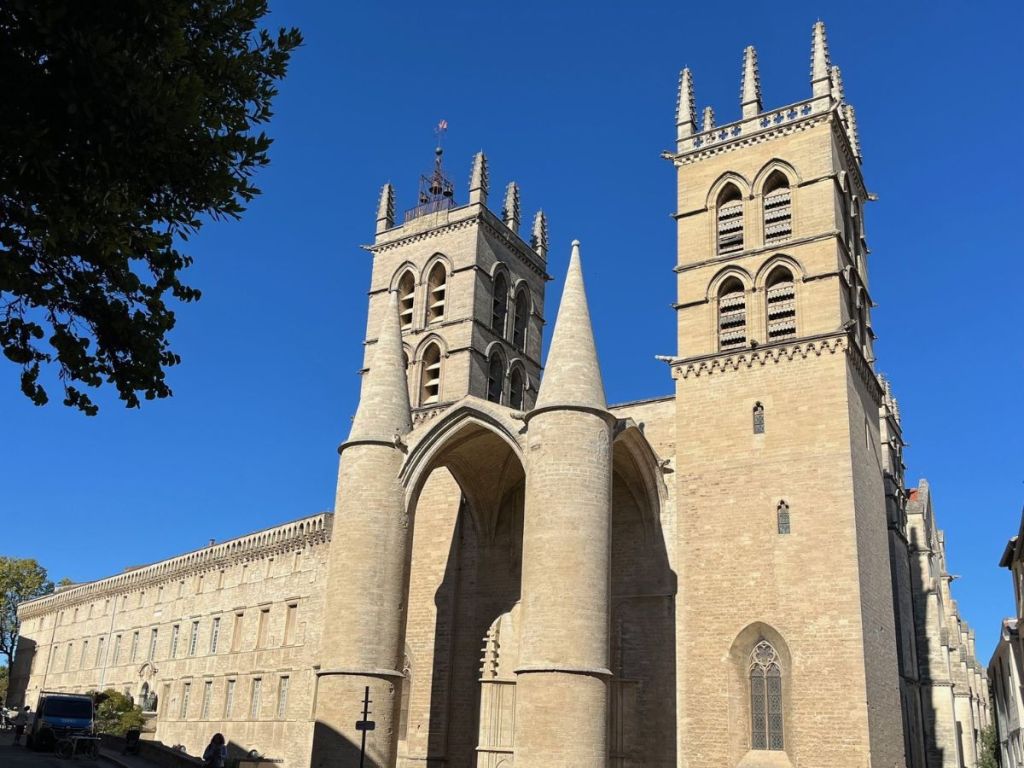
Saint Peter’s Cathedral — a rare and striking example of Southern Gothic architecture. ©Photo: Algoma
Saint Peter’s Cathedral, Montpellier’s southern gothic landmark.
Discover its story
Right near the faculty where Rabelais studied medicine in Montpellier stands the unique Saint Peter’s Cathedral, considered a fine example of Southern Gothic architecture.
Originally a Benedictine chapel, it became an episcopal seat in 1536. Commissioned by Pope Urban V, the Cathedral still bears traces of the work carried out in the 14th century. But, unfortunately, the Wars of Religion later brought bloodshed and devastation to the site. Renovations and transformations followed over the centuries, notably in the 18th and 19th centuries with the addition of a new choir and expansions undertaken by a disciple of Viollet-le-Duc (the great 19th-century figure in charge of architectural heritage who had a considerable impact in France – more on that later).
Nevertheless, the Cathedral has retained striking medieval elements on its exterior, particularly on the main façade: the four massive towers and the canopied porch are truly spectacular. Inside, although the central nave was largely transformed in the 19th century, its elevation still reflects its Gothic inspiration. The cathedral also houses a remarkable organ and several notable works of art, including “The Fall of Simon Magus” by the Montpellier painter—a Protestant! —Sébastien Bourdon, are well worth admiring. This fall can cleverly be interpreted both as an illustration of the Catholic faith and as an apologia for the Protestant faith.
If climbing 200 steps doesn’t deter you, you can enjoy a panoramic view of the city and its surroundings from the Urban V Tower.
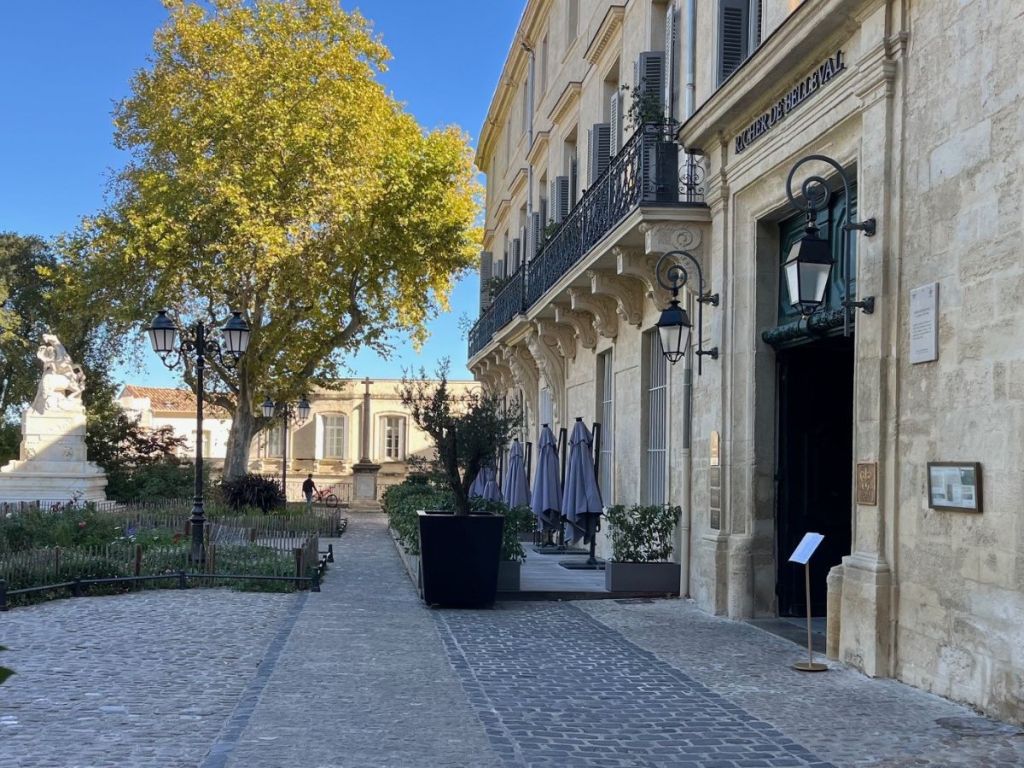
Place de la Canourgue — Montpellier’s most intimate and aristocratic square. ©Photo: Algoma
The Écusson district, the charm of Montpellier’s old town.
Discover its story
If you wander through the city center, you will truly experience the art of daily life in southern France. Narrow, winding streets welcome you, revealing hidden corners and inviting terraces ideal for sitting and watching life go by.
Among Montpellier’s most beautiful squares, as you leave Saint Peter’s Cathedral, you’ll find Place de la Canourgue. Lined with magnificent 17th-century mansions, this square feels like the city’s secret heart. Perhaps because it was once the city’s center before being supplanted by Place de la Comédie during the 19th-century urban renewal projects, it owes much of its unique charm to this relative neglect.
And it’s not the only place worth stopping, far from it. Strolling through Montpellier’s historic center is a delight, revealing numerous monuments at every turn: remnants of the medieval walls, more than a hundred palaces and residences built over the centuries, impressive buildings from the late 19th century… Not to mention the many shops that bring this delightful district to life.
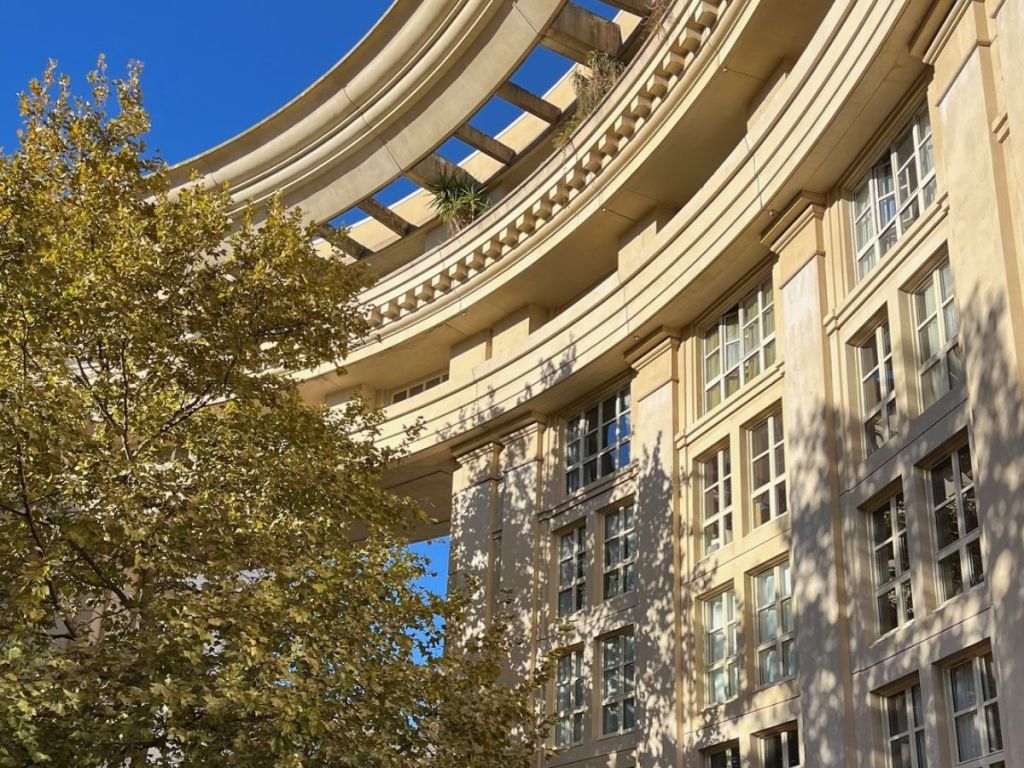
The Antigone district — Ricardo Bofill’s bold homage to ancient Greece. ©Photo: Algoma
The Antigone district: Montpellier’s bold 20th-century vision.
Discover its story
In stark contrast to your first stroll around the Place Royale du Peyrou, a monumental architectural complex was deliberately built: the Antigone district.
Dating from the 1980s, this ensemble is the work of Catalan architect Ricardo Bofill. It can be reached from the Place de la Comédie, our very first meeting point. After crossing the Polygone shopping center, one arrives directly -through a passage the architect strongly opposed, as he had intended this space to create a complete break and turn entirely away from the old town!- into an area of a strange form of modernity already marked by time.
Yet, it is a pleasant place to spend time, with its terraces and fountains, in the shade of circular buildings inspired by ancient Greece, featuring large fluted columns and Greco-Roman decorative motifs. Restaurants and bars welcome office workers from the surrounding business buildings, alongside residents -some of whom have access to the local social housing- as well as visitors from across the city who come to enjoy the sports and cultural facilities (public media library, Olympic-sized swimming pool).
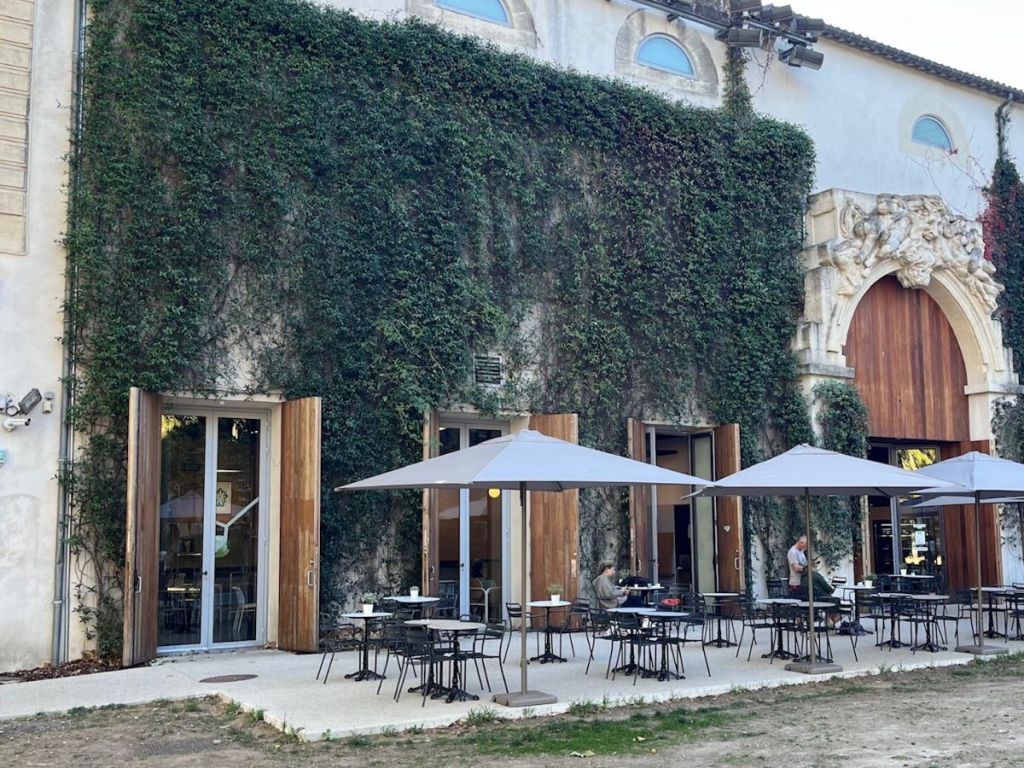
The Musée Fabre — one of France’s great provincial art museums, steps from Place de la Comédie. ©Photo: Algoma
The Fabre Museum, one of southern France’s great art museums.
Discover its story
It’s hard to visit Montpellier without stopping at the Fabre Museum.
Ideally located near the iconic Place de la Comédie, the museum brings together a former 18th-century palace with a former 17th-century Jesuit college, remodeled in the 19th century. Part of this transformation was carried out by the painter and collector François-Xavier Fabre, the man behind the creation of the museum. The entire complex has been extensively renovated and enhanced in recent years.
Inside, visitors can admire an extensive collection of paintings from the Italian Renaissance and Baroque periods, French paintings from the 17th to the 19th centuries, as well as Flemish and Dutch art. Initially assembled by Fabre himself, the collection has since been enriched through donations and contributions from various French museums. Pierre Soulages, famous for his artistic explorations of black, notably donated a series of works representative of the evolution of his art.
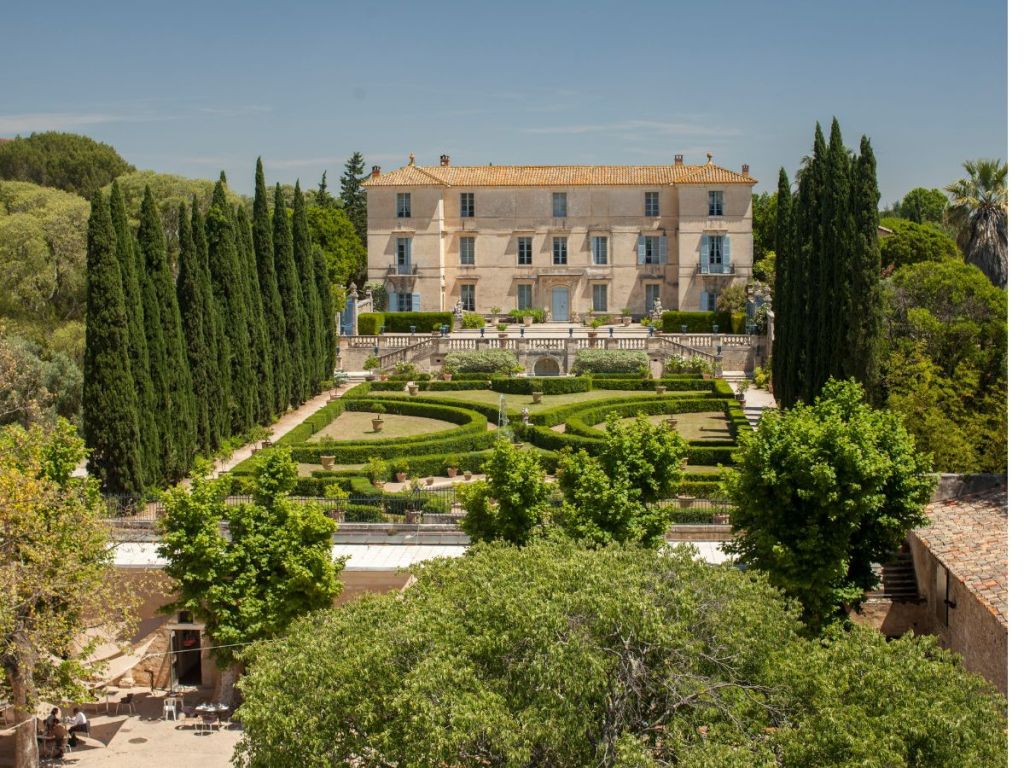
The Château de Flaugergues — a grand “folie” and its formal gardens, just minutes from the city center. ©Photo: Château de Flaugergues
Flaugergues, the sweetness of the French “vie de château”.
Discover its story
When you’re in France, and after exploring the streets and museums of cities like Montpellier, it’s a true luxury to stroll through the paths of French formal gardens, so characteristic of the aristocratic lifestyle that even the French—including perhaps the descendants of the most violent revolutionaries— long for.
The Château de Flaugergues, located in eastern Montpellier, dates back to the 17th century. Italianate in style, it’s representative of those so-called “follies” that once served as country residences for the nobility and the wealthiest bourgeois families. It is a delight to visit the interior of the château and discover its monumental staircase, admire the 17th- and 18th-century furnishings, or wander through the park and its various areas: a Japanese-inspired garden, a botanical garden, a bamboo grove, an orangery, or the chateau’s own vineyards! It is even possible to book guided tours of the estate vineyards or of the wine cellar.
The château is easily accessible by public transport, offering an opportunity to explore the less touristy, yet still lively, parts of the city.
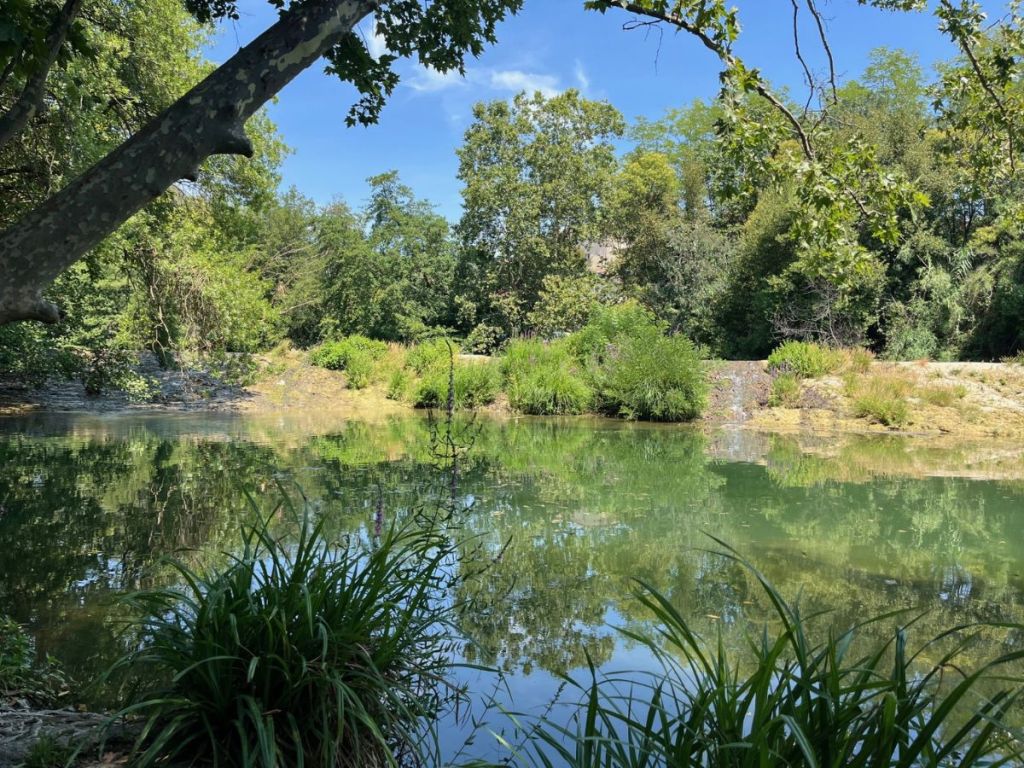
Still waters and centuries-old trees along the Lez, at the Domaine de Méric near Montpellier.© Algoma
The Domaine de Méric: A Touch of Impressionism
Discover its story
If you are visiting Montpellier in the height of summer and looking for a cool, pastoral atmosphere without leaving the city, another walk just a few kilometers from the center might appeal to you: the park at the Domaine de Méric.
This 12-hectare estate belonged to the family of the painter Frédéric Bazille—one of the pioneers of Impressionism, who died prematurely on the battlefield in 1870 at the age of 28. The estate is crossed by the Lez, a river that flows into the Mediterranean Sea a few kilometers south of Montpellier, at the seaside resort of Palavas-les-Flots.
Along the Lez and throughout the estate’s various paths, one can still see traces of water mills and 19th-century structures; their weathered stones speak of a bygone era when Castelnau-le-Lez—painted by the young artist—was still a village rather than a suburb of Montpellier. The walk offers a chance to immerse yourself in one of the sites that inspired Frédéric Bazille and to discover the landscapes immortalized in his paintings.
The estate is situated south of a vast protected area dedicated to preserving local biodiversity. Here, you might even spot a small fish found nowhere else on Earth: the Lez sculpin—easily recognized by its tadpole-like head—lives exclusively in this river. This protected environment is a haven for dragonflies, which dart and flutter over the pools of water. Formed through the interaction between human activity and nature, these pools create small cascades that, while obviously nowhere near Niagara Falls, still make the river sing.
The estate offers a delightful experience, a favorite with those living in Montpellier: a riverside stroll in the shade of centuries-old trees provides an easy way to escape the heat of the city center without having to travel far.
Want to explore further?
For coastline unlike any other, discover the Coast & its Lagoon…
For hilltop villages, ancient abbeys, and sun-drenched vineyards, wander Inland from Montpellier...
And even further but just next door, to the east, a land where Rome never left and nature still runs wild — discover the Gard…
To the west, a land of wonders — discover the Aude…
Interested in visiting Montpellier?
→ Find a selection of guided tours and activities
If you book through this link, I may receive a small commission at no extra cost to you.
 Algoma