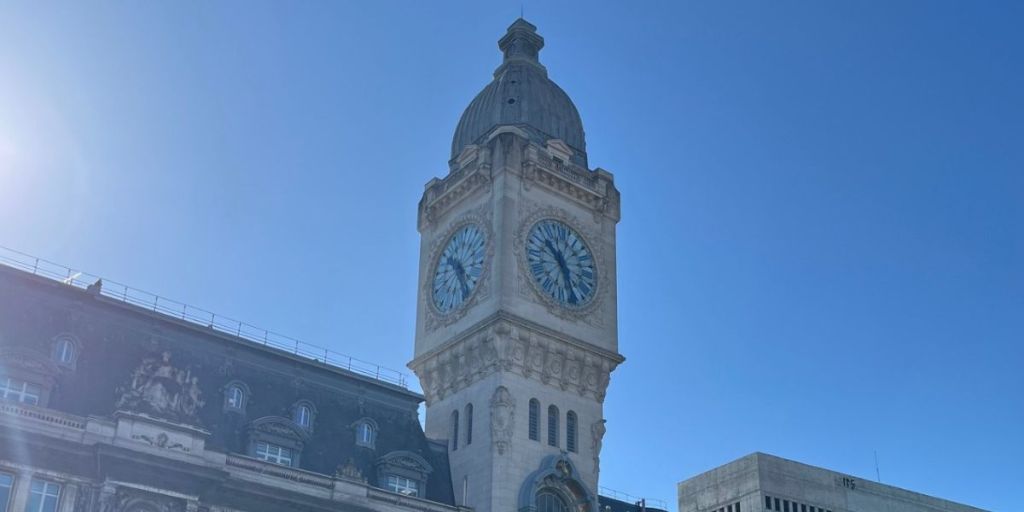
Gare de Lyon, Paris — gateway to the South ©Photo: Algoma
Planning a trip to the south of France can feel overwhelming, but the Hérault offers one of the most complete and rewarding travel experiences in the region.
The Hérault is one of the most versatile destinations in the South of France — a vibrant cosmopolitan city, ancient Roman and Greek heritage, wild volcanic landscapes, medieval villages and some of the oldest vineyards in France, all with a lively Mediterranean spirit. Here is everything you need to plan a smooth and memorable trip.
How to Get There
Montpellier is one of the easiest cities to reach when traveling in the south of France, making it an ideal starting point for your itinerary.
By train — the easiest option
Montpellier is directly connected to Paris by TGV. The journey takes around 3 hours 20 minutes from Paris Gare de Lyon, with several departures daily. This is by far the most comfortable and scenic way to arrive — no jet lag stress, no traffic, and you step off the train right in the heart of the city.
Plan ahead and book your French train tickets at sncf-connect.com — prices can skyrocket the closer you get to your travel date!
By plane — the nearest airports are:
Montpellier–Méditerranée Airport — just 8 km from the city center, well connected to Paris and major European hubs
Marseille Provence Airport — 1h30 from Montpellier, the most international option with direct flights from the US via connecting hubs
Barcelona El Prat — 3 hours from Montpellier, worth considering if you find better transatlantic connections
Best Time to Visit
Choosing the right season is key when planning your south of France travel itinerary.
April to June is the sweet spot. The garrigue is fragrant, wildflowers are blooming across the causses and volcanic hills, temperatures are pleasant (65–75°F / 18–24°C), and the main sites are not yet crowded. Perfect for walking, driving through wine villages and spending time outdoors.
September and October are equally excellent. The summer crowds have gone, the light turns golden, and the temperature is ideal. The Languedoc wine harvest happens in September — a wonderful time to be in the region, with many domaines welcoming visitors.
July and August are best avoided if you are sensitive to heat. Temperatures regularly reach 95–100°F (35–38°C) in Montpellier, and the city — full of students and festival crowds during the rest of the year — takes on a different character in high summer.
November to March is quiet and mild by northern standards, but some smaller sites and restaurants in villages may have reduced hours or be closed. Montpellier itself, however, remains lively year-round.
Where to stay
Choosing where to stay is an important part of any south of France itinerary, and Montpellier offers an excellent base.
Montpellier is the natural base for exploring the Hérault. One of France’s youngest and fastest-growing cities, it has a good range of accommodation, from boutique hotels in the historic Écusson neighborhood to charming guesthouses in the surrounding wine country.
If you prefer a quieter setting, Pézenas — a beautifully preserved Renaissance town 50 minutes from Montpellier, long associated with Molière — is an excellent alternative base, with several upscale maisons d’hôte
For stays near the coast, Sète — the singular “island city” built between the sea and the Étang de Thau lagoon — offers a more authentic seaside experience than the typical resort towns.
Tours & Activities
You can either rent a car or join guided tours for day trips — in Montpellier or at sites like the Cirque de Navacelles, Saint-Guilhem-le-Désert or the Bassin de Thau, local knowledge can make a real difference.
GetYourGuide offers a wide selection of guided tours and activities in the Hérault, including wine tastings at local domaines, kayaking in the Gorges de l’Hérault, coastal excursions on the Étang de Thau and more.
 Algoma